
The drains that enter the Yamuna in Agra still carry organic load, colour and odour after secondary treatment, and tannery units in the region discharge effluent that needs a final polishing step before it leaves the plant. In both cases, activated carbon — PAC or GAC — is the step that adsorbs the dissolved organics, colour and odour that biological treatment leaves behind. Innovacorp India manufactures and supplies activated carbon in Agra for municipal water treatment, tannery effluent polishing, and chemical and process industries, with the grade selected against the actual effluent analysis rather than a catalogue number.
Agra's industrial base runs on leather and footwear, tourism, oil refining, chemical manufacturing, glass, ceramics and food processing, and each of these streams has a different carbon requirement. This page covers the streams that actually exist in Agra — sugar refining is not one of them, since Agra does not have a sugar mill base.
The role of carbon changes with the stream. The notes below map the common Agra streams to the stage where carbon usually comes in.
Municipal STPs and drains. Agra has a large network of surface drains and STPs under the Namami Gange programme, and the tertiary polishing step is where carbon enters. PAC dosing or GAC columns remove the dissolved organics, colour and odour that secondary treatment leaves behind.
Tannery effluent. Agra's tannery units carry chromium, sulphides and high BOD/COD in their effluent. Carbon polishing follows the biological treatment and adsorbs the residual organics and colour, and the same step is used in CETPs before final discharge.
Chemical and oil refining units. Agra has chemical manufacturing and oil refining units, and both use carbon for trace organics, colour and odour control in process water and wastewater. The grade is selected on the stream, not on the product name.
Food processing and glass/ceramics. Process water in food processing needs taste, odour and colour control, and carbon is used at the polishing stage. Food-contact grades are selected where the process requires it, and the final specification is confirmed on a lab trial.
Both forms work by adsorption, but the application method is different. The notes below are a selection guide, not a specification.
Powdered Activated Carbon (PAC). Short contact time, batch dosing, seasonal or shock loads. In a municipal STP, PAC dosing is practical after the monsoon when the organic load rises, because the dose can be adjusted to the load rather than fixed by the bed volume.
Granular Activated Carbon (GAC). Fixed-bed columns, continuous operation, lower operating cost over time. GAC suits streams that need continuous polishing — a chemical plant's process water, or a tannery CETP's final discharge.
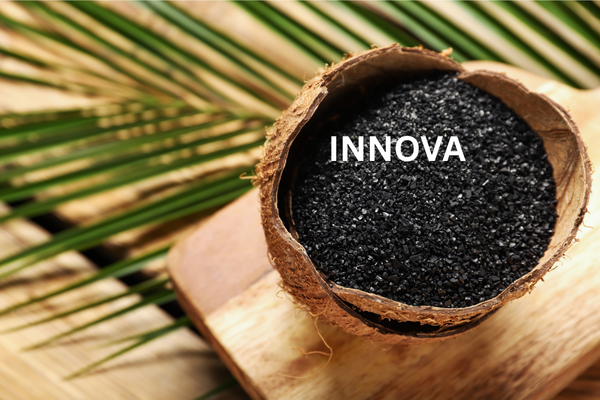
Substrate choice. Coconut shell, coal and wood-based grades are available. Coconut shell carbon is microporous and effective on low-molecular-weight organics, while coal-based carbon has a wider pore distribution. The final choice depends on the effluent analysis, not on the catalogue.
The first step in carbon selection is the effluent analysis, not the product datasheet. The parameters below are the ones that matter most in Agra's streams.
Which activated carbon is used for tannery effluent treatment in Agra?
Tannery effluent uses carbon as a polishing step after biological treatment, to adsorb residual organics and colour. PAC is practical for batch dosing, while GAC suits continuous polishing in a fixed-bed column. The final grade is confirmed on a jar test and an effluent analysis.
Can activated carbon remove chromium from tannery wastewater?
Activated carbon does not remove chromium directly — chromium reduction and precipitation are handled by chemical or biological treatment. Carbon's role is to polish the residual organics and colour after that step, so it should be used as a tertiary treatment rather than a primary one.
How is PAC dosed in a municipal STP in Agra?
PAC is dosed as a slurry, usually alongside or after coagulation, with the dose set on the effluent's organic load. The load rises during the monsoon, so the dose is adjusted seasonally, and the final figure is confirmed on a jar test rather than on a label value.
What is the difference between PAC and GAC for Agra's water treatment?
PAC is used for short contact time and batch dosing, which suits seasonal or shock loads. GAC is used in fixed-bed columns for continuous polishing and lower operating cost over time. The choice depends on the plant's operation pattern, not on the carbon grade alone.
Activated carbon is supplied in moisture-barrier bags (PAC) or standard industrial bags and containers (GAC); pack sizes on request. Store under cover, away from direct sunlight and moisture. PAC should be slurried before dosing rather than added dry, and GAC beds should be backwashed before service to remove fines. Because the correct grade and dose depend on the effluent analysis, the final specification is confirmed on a lab trial with your sample.
We help plant and quality teams work through grade selection, the PAC vs GAC decision, dose and contact time. Final specification and dose are confirmed on a lab trial with your effluent sample. For Agra-specific questions, call +91-9312871070 and our technical team will walk through the treatment stage with you. If your plant also treats boiler feedwater or cooling water, the boiler chemicals range and the cooling tower chemicals range cover the adjacent stages. Related products are on our activated carbon product page and the Agra industrial chemicals page.
© 2026 Innovacorp India Pvt Ltd. All Rights Reserved. Managed & Developed by Innova Corporate India
 Chat with Us