
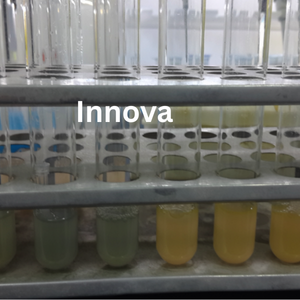
Badli Industrial Estate has a printing problem that most people do not see. It is not on the press — it is in the drain. Printing, packaging, and label units account for over 11% of the estate's industrial mix [citation:14]. Every colour changeover, every ink wash, every cleaning cycle sends pigment-laden water somewhere. Some of it goes to the CETP. Some of it goes to the drain. Colour reducing agents are for the units that want to control what they send.
The estate's industrial profile is dominated by auto parts and light engineering (24.34%), followed by printing and packaging (11.43%), electrical goods (11.56%), and plastics (7.87%) [citation:14]. Printing is the third-largest category, and it is the one that generates visible colour in effluent.
The specific sources of coloured wash water in Badli's printing units include:
Not every printing unit has a colour problem. Water-based inks and low-volume operations may discharge effluent that looks clear. But solvent-based inks, high-colour jobs, and units without pre-treatment can send visible colour to the CETP.
It is important to be clear about what the CETP compliance parameters are. The February 2026 DPCC data for Badli CETP shows the following:
Colour is not listed as a compliance parameter. This means the CETP does not fine units for colour discharge. But colour still matters for two reasons. First, visible colour in the CETP inlet adds to the organic load — pigments and dyes contribute to COD. Second, if your unit discharges to a drain or water body outside the CETP network, colour can be a visible violation even if it is not measured at the CETP.
Colour reducing agents for printing effluent are typically cationic polymers. They work by neutralising the negative charge on pigment particles and dye molecules. Once the charge is neutralised, the particles can agglomerate into larger flocs that settle or float. The clarified water has lower colour and lower COD.
The chemistry is different from sugar decolorization. Sugar colour bodies are dissolved organic compounds that need adsorbents or precipitation reactions. Printing colour bodies are often dispersed pigments — solid particles that respond well to coagulation and flocculation. A product that works for sugar will not necessarily work for ink wash water, and vice versa.
For Badli's printing units, the practical approach is a jar test. Take a sample of your wash water, add the colour reducing agent at different doses, and observe how much colour is removed and how fast the flocs settle. This tells you whether the product is right for your specific ink and process.
A simple guide for Badli's printing and packaging units:
Do not add a colour reducing agent if your effluent is already clear. The product costs money, and if there is no colour to remove, you are adding cost without benefit. The jar test is the cheapest way to find out.
| Parameter | Details |
|---|---|
| Appearance | Liquid (product-dependent) |
| Type | Cationic polymer (product-dependent) |
| pH (concentrate) | TDS on request |
| Active content | TDS on request |
| Shelf life | TDS on request |
| Packing | Standard industrial packing; pack sizes on request |
Final specification to be confirmed against TDS and a jar test on your effluent.
Dosage depends on the colour intensity and the suspended solids in your wash water. There is no universal ppm figure. The starting point is a jar test on a sample of your actual effluent. Vary the dose, observe colour removal and floc formation, and select the lowest dose that achieves your target clarity.
Feeding points matter. The coagulant goes into rapid mixing where it disperses quickly. If a flocculant is used, it goes into slow mixing where flocs can grow without breaking. For small printing units, a simple batch treatment in a settling tank may be sufficient. For larger volumes, continuous dosing with a small reaction tank works better.
For effluent treatment beyond colour — foam control or disinfection — the antifoaming agent for ETP and chlorine tablets for effluent disinfection pages cover those applications.
Standard industrial packing. Pack sizes on request.
Innovacorp works with printing unit operators to interpret jar test results and select the appropriate colour reducing agent. We do not claim on-site presence in Badli unless specifically confirmed for your project.
Which Badli units generate coloured effluent? Printing, packaging, and label units are the main sources. Ink wash water, colour changeover washes, and cleaning solutions carry pigments that show up in effluent.
Does Badli CETP fine for colour? Colour is not a listed compliance parameter at Badli CETP. The compliance issue is BOD. But colour contributes to organic load, and visible colour outside the CETP network can still be a violation.
Is this for sugar decolorization? No. Badli does not have sugar mills. This page covers colour reducing agents for printing and packaging effluent.
How do I get a TDS? Call +91-9312871070 and describe your effluent source, colour intensity, and current treatment setup. We will share the relevant TDS and discuss trial quantities.
For colour reducing agent selection and TDS requests for Badli's printing and packaging units, call +91-9312871070.
© 2026 Innovacorp India Pvt Ltd. All Rights Reserved. Managed & Developed by Innova Corporate India
 Chat with Us