
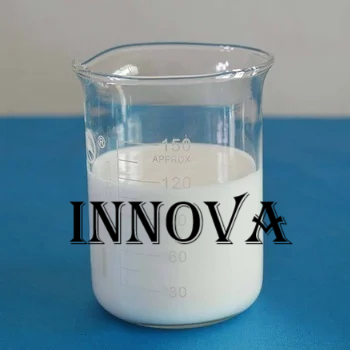
Innovacorp India manufactures and supplies anti-foaming agents for processing units across Bawal's industrial belt. The IMT area in Bawal spans Sectors 3, 5 and 6, with a sugar and distillery plant in Phase II and food ingredient units in Sectors 5 and 9. Beyond the industrial estate, Bawal block's agricultural belt — villages like Bhudla, Basai and Berwal — feeds into the local processing chain. Foam shows up differently at each point: juice and syrup in sugar processing, fermenter vessels in the distillery, and liquid mixing lines in food units. Our defoamers are selected by application, not by a single universal grade.
Foam is not just a nuisance. In a processing plant it changes working volume, affects heat transfer and can carry product into overflow lines. In Bawal's units, the problem appears at these stages:
A defoamer is a surface-active formulation that destabilises the air-liquid film holding the foam together. It works through three main mechanisms:
The practical effect is faster foam knockdown and longer foam-free intervals between doses — which matters most in continuous processes where foam affects throughput.
Both chemistries are used in Bawal's processing units, but they suit different situations.
In sugar and distillery units in Phase II, silicone grades are common because of their low-dose performance. In the food ingredient units in Sector 5 and Sector 9, the choice depends on the end product and customer specification. A plant trial on your actual process stream is the most reliable way to compare performance.
Below are typical parameters. Final values depend on the specific grade and are confirmed in the TDS or after lab trial.
| Parameter | Typical Note |
|---|---|
| Appearance | Opaque to translucent liquid (grade-dependent) |
| pH (as applicable) | Grade-dependent; TDS on request |
| Active content | Grade-dependent; TDS on request |
| Density | As per grade; TDS on request |
| Viscosity | As per grade; TDS on request |
| Shelf life | TDS on request |
| Pack size | Standard industrial packing; pack sizes on request |
Product specification values are not invented here. Please ask for the TDS for the specific grade you are evaluating. Final spec is confirmed after lab trial.
Dosage depends on the application. In sugar processing, continuous dosing is typically 5 to 20 ppm on juice or syrup. In distilleries, fermenter dosing is usually lower and may be intermittent. In food processing, dosing is often expressed as ppm on the product or as a small percentage of batch volume.
Feeding points differ by stage:
We recommend a trial to establish the initial dose, then adjust based on foam behaviour and process stability.
Standard industrial packing applies. Pack sizes are confirmed on request. Store in a cool, dry, covered area away from direct sunlight. Keep containers closed when not in use. Bawal's summer heat — with temperatures in the Rewari belt crossing 40°C in May and June — can affect product stability if drums are exposed. Follow the storage instructions on the product label and SDS.
The most common mistake is overdosing. Adding more defoamer than needed can cause its own problems — dispersed silicone or organic droplets can affect downstream filtration, or carry over into final product. Start low and increase only if foam persists.
A second mistake is using a defoamer as a substitute for process correction. If foam is caused by excessive agitation, poor temperature control or a specific contaminant, the defoamer treats the symptom, not the cause. Address the process issue first where possible.
A third issue is mixing incompatible defoamer types in the same storage tank without checking compatibility. Some silicone and organic defoamers can separate or gel when mixed. Keep grades separate and confirm compatibility before switching.
We support product selection and dosage review for Bawal's sugar, distillery and food processing units. Share your process stage, foam severity, current chemical programme and any product quality constraints (silicone-free requirement, for example), and we will suggest a starting grade and dose. Final specification and dose are confirmed after lab trial and plant trial. On-site claims are not made here unless separately confirmed.
In sugar processing, foam appears in juice clarification, evaporators and vacuum pans, where organic impurities stabilise air bubbles. In distilleries, molasses fermentation creates foam in fermenter vessels. In food processing units in Bawal's IMT sectors, foam forms during liquid mixing, filling and sauce or syrup preparation. An anti-foaming agent helps break existing foam and prevent new foam from forming.
Continuous dosing for sugar processing is typically in the range of 5 to 20 ppm on juice or syrup. In food processing, dosing may be lower and is often expressed as ppm on the product or as a percentage of batch volume. Exact dosage depends on the process stage and foam severity, and is confirmed after a trial.
Silicone defoamers are effective at low doses, but for food processing, non-silicone (organic) grades are often preferred where silicone carryover into the final product is a concern. The choice depends on your product type, downstream processing and quality requirements. A plant trial is recommended before switching.
Store in a cool, dry, covered area away from direct sunlight. Keep containers closed when not in use. Bawal's summer temperatures in the Rewari belt can affect product stability if drums are left open or exposed to direct heat. Follow the storage instructions on the product label and SDS.
Call +91-9312871070 to discuss your Bawal plant's anti-foaming requirement.
© 2026 Innovacorp India Pvt Ltd. All Rights Reserved. Managed & Developed by Innova Corporate India
 Chat with Us