
Scale on a heat transfer surface is not just a maintenance nuisance. It is an insulating layer that forces the equipment to work harder for the same output. In Dubai's chillers, heat exchangers, and desalination units, where cooling demand runs year-round, even a thin scale layer translates into measurable energy waste and a shorter equipment life.
Innovacorp India Pvt Ltd supplies inhibited acid descalers in Dubai for chillers, heat exchangers, and MSF desalination units. The formulations combine an acid that dissolves mineral scale with a corrosion inhibitor that protects the base metal during the cleaning cycle. Selection depends on the metallurgy of the equipment and the type of scale present — a product designed for steel tubes is not appropriate for copper-nickel chiller condensers.
Acid dissolves scale. That is the simple part. The complication is that acid also attacks the metal underneath. In a chiller condenser with copper tubes, uncontrolled acid exposure can pit the tube wall or cause general thinning that shortens service life. The same applies to MSF units and any heat exchanger where the tube wall is the barrier between cooling water and process fluid.
An inhibited descaler addresses this by adding a corrosion inhibitor to the acid formulation. The inhibitor adsorbs onto the clean metal surface and reduces the rate at which the acid attacks it. This allows the acid to do its job on the scale while keeping metal loss within acceptable limits for the duration of the cleaning. The key is that the inhibitor must be matched to the metallurgy — what protects steel may not adequately protect copper alloys, and vice versa.
Scale composition varies with the water source and the process. Calcium carbonate is the most common deposit in cooling systems using desalinated or blended water. Calcium sulfate can form in systems with higher sulfate levels. Silica is a different problem entirely — it is largely unaffected by standard acid descalers and may require an alkaline approach or a specialized formulation. Knowing what the scale is made of is the first step in choosing the right product, which is why a scale sample test or a trial cleaning on a small section is often worthwhile before treating the whole system.
Dubai's cooling and water infrastructure creates steady demand for descaling. District cooling plants, commercial chiller systems, and industrial heat exchangers all accumulate scale over time. Jafza is also home to a growing heat exchanger manufacturing cluster, with a major new production facility under development to serve data center cooling demand. These systems require maintenance cleaning to preserve their designed heat transfer performance.
MSF desalination units face a different scale environment. The high-temperature flashing process promotes the formation of hard deposits on tube surfaces, and the metallurgy is often selected for corrosion resistance rather than scale tolerance. Descaling these units requires a formulation that dissolves the deposit without compromising the tube material.
Descaling chemicals are supplied as liquid formulations. The characteristics depend on the acid type and the inhibitor system. The table below gives the general properties; specific values for the grade under consideration are provided in the technical data sheet.
| Parameter | Inhibited Acid Descaler |
|---|---|
| Appearance | Clear to slightly hazy liquid |
| Active Type | Inhibited acid (hydrochloric, sulfamic, or proprietary blend) |
| pH (as supplied) | TDS on request |
| Specific Gravity | TDS on request |
| Solubility | Water-soluble (dilute before use) |
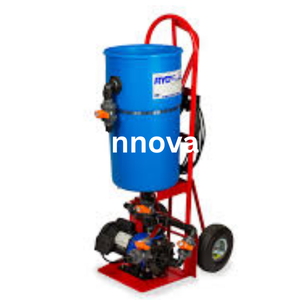
Descaling is typically done by circulation or soak. In a circulation clean, the diluted descaler is pumped through the equipment in a closed loop, often using a temporary tank and pump. The solution is circulated for a set period, monitored for acid strength and temperature, then drained and flushed. In a soak clean, the equipment is filled with the solution and left to stand. The choice depends on the equipment configuration and the scale severity.
Share your equipment type, metallurgy, and scale description for a product recommendation. Call +91-9312871070.
Descaling chemicals are supplied as liquids in 20L and 200L HDPE drums, and 1000L IBC totes. Store in a shaded, ventilated area away from direct sunlight and heat. Follow the safety data sheet for handling requirements and personal protective equipment. Acid products require appropriate PPE including gloves, eye protection, and face protection.
Spent descaling solution is an industrial wastewater. It cannot be discharged to storm drains, sewers, or the harbor without treatment and approval. Trakhees regulations require that industrial wastewater be contained and treated to acceptable standards before disposal, and a holding tank with a liquid-tight liner is typically required for collection. The neutralized solution should be disposed of through an approved route, which may include a permitted treatment facility. This is a regulatory reference, not a compliance claim; the specific requirements for your facility should be confirmed with the relevant authority.
For ongoing scale prevention in cooling systems, see our cooling tower water treatment chemicals. For corrosion control in closed loops, see our corrosion inhibitors for district cooling.
Scale composition depends on the water source and the operating conditions. In Dubai, chillers and heat exchangers using desalinated or blended water typically accumulate calcium carbonate scale. Systems using treated sewage effluent or brackish water may also see calcium sulfate and silica deposits. Silica scale is particularly difficult to remove with acid alone and may require a different chemical approach. Knowing the scale type is the first step in selecting the right descaler.
Plain acid dissolves scale but also attacks the base metal. An inhibited descaler contains a corrosion inhibitor that selectively protects the metal surface while the acid dissolves the scale. The inhibitor adsorbs onto the clean metal and reduces the corrosion rate to an acceptable level during the cleaning cycle. Without inhibition, acid cleaning can cause pitting or thinning of tubes, especially in copper alloys used in chiller condensers.
Not necessarily. Chiller condensers often use copper or copper-nickel tubes, which require a descaler formulated for copper alloy protection. MSF desalination units use different metallurgy and may have different scale composition due to the high-temperature flashing process. The descaler formulation should match the metallurgy and the scale type. Using a product designed for steel on copper tubes can cause damage.
Spent descaling solution is an industrial wastewater that cannot be discharged to storm drains, sewers, or the harbor without treatment and approval. Trakhees regulations require that industrial wastewater be contained and treated to acceptable standards before disposal. A holding tank with a liquid-tight liner is typically required for collection. The neutralized solution should be disposed of through an approved route, which may include sending it to a permitted treatment facility.
For product selection and technical discussion, call +91-9312871070.
© 2026 Innovacorp India Pvt Ltd. All Rights Reserved. Managed & Developed by Innova Corporate India
 Chat with Us