
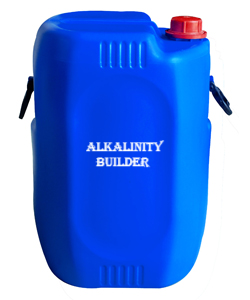
A sugar refinery in Khuzestan province adjusting juice pH as autumn beet quality shifts through the season. A beet processing plant in Kermanshah holding clarification pH steady despite variable raw juice. A boiler house in an Iranian industrial complex maintaining water pH to protect steel tubes from acidic corrosion. These are three different pH control problems, three different process stages, and one common requirement: the pH has to stay where it is set, not drift with the feedstock. Innovacorp manufactures alkalinity builders for these applications, and supplies to Iranian industrial buyers with dosage guidance based on their process conditions.
Iran produces around 1.8 million tonnes of sugar annually from beet and cane, meeting roughly 82% of domestic demand. Sugar beet is grown mainly in Kermanshah, Fars, Khorasan, and West Azerbaijan, while sugarcane comes from Khuzestan province. Mills and refineries operate across these regions, and each one faces the same fundamental issue: raw juice pH is not stable. It shifts with beet variety, harvest timing, storage conditions, and cane quality.
If juice pH drops too low, acid-catalyzed inversion converts sucrose into glucose and fructose, which cannot be crystallized. That is direct sugar loss. If pH runs too high, degradation products form and colour bodies increase. The clarification stage needs a stable, controlled pH to work properly, and alkalinity builder is what holds that setpoint.
Raw juice from beet or cane carries natural organic acids. After liming, the pH rises, but it does not stay there on its own. Buffering capacity varies with the crop, and without active control, pH drifts during clarification and settling. Alkalinity builder is dosed to bring the juice to the target range and hold it there through the reaction time.
The target range for juice clarification is typically pH 7.0 to 8.0, depending on the process. Within this range, lime reacts effectively with impurities, flocculants work as intended, and the subsequent filtration or settling step performs consistently. Outside this range, clarification becomes inconsistent: flocs form poorly, turbidity carries through, and the downstream evaporator and crystallizer see higher colour and impurity loads.
Alkalinity builder is not a substitute for lime. It works alongside lime and flocculants, holding the pH where the rest of the treatment train can do its job.
Beyond sugar processing, alkalinity builder is used in boiler water treatment. Boiler water pH is typically maintained between 10.0 and 11.5 to keep the protective magnetite layer stable on carbon steel surfaces. When pH drops below this range, the magnetite layer becomes soluble and the steel is exposed to acidic corrosion. When pH runs too high, caustic corrosion can occur under deposits.
In Iranian plants, feedwater hardness can be variable, and hardness carryover increases the risk of scale and under-deposit corrosion. Consistent alkalinity control supports the performance of scale inhibitors and oxygen scavengers, and helps keep the boiler water within the range where the protective layer stays intact.
Liquid alkalinity builder: Ready-to-dose liquid formulation, typically fed by metering pump into the juice line or boiler feedwater. Suitable for automatic pH control loops.
Powder alkalinity builder: Dry formulation for plants that prefer to prepare solutions on site. Dissolved in a mixing tank and dosed as a solution.
Application-specific grades: Formulations adjusted for sugar juice clarification versus boiler water treatment, since the target pH range and the interfering ions differ between the two applications.
Indicative values from our standard range. Final specification is confirmed against your process requirement and TDS.
| Parameter | Typical Range |
|---|---|
| Appearance | Clear liquid or white powder (grade dependent) |
| pH (as supplied, liquid grade) | Alkaline |
| Active Content | Grade dependent; TDS on request |
| Density (liquid grade) | 1.10 – 1.30 g/cc (grade dependent) |
| Solubility (powder grade) | Fully soluble in water |
TDS on request for specific grades. Values above are indicative and not a substitute for a jar test or trial on your process stream.
Sugar juice clarification: Dosage depends on the starting pH and buffering capacity of the juice, which changes with beet or cane quality. As a starting range, 0.5 to 3.0 kg per tonne of juice is typical. The actual dose is set by measuring pH before and after addition on your process line, and adjusting the feed rate to hold the target setpoint.
Boiler water treatment: Dosage depends on feedwater alkalinity, boiler pressure, and the target pH range. The dose is set to maintain boiler water pH between 10.0 and 11.5 (or the range specified by your boiler OEM). A water analysis and a baseline pH survey are needed before setting a dose.
These are starting ranges, not fixed prescriptions. Raw material quality, process temperature, contact time, and existing treatment chemicals all shift the requirement. We work with your process team to set a starting dose and adjust it against measured pH.
Packing: Standard industrial packing. Pack sizes on request.
Storage: Store in a cool, dry, covered area away from direct sunlight. Keep containers sealed until use. Alkalinity builders are alkaline materials and should be handled with gloves and eye protection. Avoid contact with acids. Rotate inventory so older stock is used first, particularly in summer months.
Setting pH once and not monitoring it. Raw juice pH changes as beet or cane quality shifts. A dose that worked at the start of the season may be wrong two weeks later. Continuous or frequent pH measurement is the only way to hold the setpoint.
Over-dosing to "be safe." Excess alkalinity builder pushes pH above the target range, which increases colour formation and can cause scaling in evaporators. More is not better.
Using the same grade for juice and boiler. The target pH range and the interfering ions are different. A grade optimized for juice clarification is not the right choice for boiler water treatment.
Ignoring the interaction with other treatment chemicals. Alkalinity builder interacts with lime, flocculants, and scale inhibitors. If you change one, check the effect on the others.
We work with your process engineers to review your pH control points, recommend a starting grade, and support trial planning on your juice or boiler water. Final specification and dosage are confirmed on your process conditions before bulk supply. Call +91-9312871070 to discuss your requirement.
In sugar refinery juice clarification, the target pH range is typically 7.0 to 8.0, depending on the raw juice quality and the clarification process used. The exact setpoint is confirmed by the refinery's process team after a jar test on the actual juice. Alkalinity builder is dosed to hold this range consistently through the season as beet or cane quality changes.
Boiler water pH is typically maintained in the range of 10.0 to 11.5 to keep the protective magnetite layer stable on steel surfaces. Alkalinity builder raises and holds pH in this range, which helps prevent acidic corrosion. In Iranian plants where feedwater hardness can be variable, consistent pH control also supports the performance of scale inhibitors and oxygen scavengers.
Dosage depends on the starting pH and buffering capacity of the juice, which changes with beet or cane quality. As a starting point, alkalinity builder is dosed to bring the juice to the target clarification pH, typically in the range of 0.5 to 3.0 kg per tonne of juice. The actual dose is confirmed by measuring pH before and after addition on your process line.
Store in a cool, dry, covered area away from direct sunlight and moisture. Keep containers sealed until use. Alkalinity builders are typically alkaline solutions or powders and should be handled with appropriate personal protective equipment (gloves, eye protection). Avoid contact with acids. Rotate inventory so older stock is used first.
Call +91-9312871070 to discuss your alkalinity builder requirement for Iran.
© 2026 Innovacorp India Pvt Ltd. All Rights Reserved. Managed & Developed by Innova Corporate India
 Chat with Us