
Bhiwadi's RIICO belt includes textile processing units in the Bhiwadi, Khushkhera and Chaupanki industrial areas [citation:22]. Their dyeing and washing operations generate foam that can cause spots, uneven shade, and machine downtime. The conventional solution is a silicone defoamer, which knocks down foam quickly and works at low dose. The problem is the residue. Silicone can stay on the fabric and cause water spots or affect re-dyeability, and in a batch that has already passed through the dye bath, that residue can mean a rejected lot [citation:24].
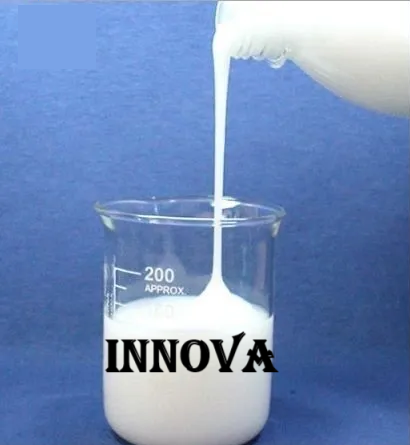
Innovacorp India supplies non-silicone defoamers for these textile processing conditions. The product controls foam without leaving the silicone residue that causes fabric quality issues. The selection depends on the dye class, the process temperature, and the surfactant load in the bath, not on a single recommendation for all Bhiwadi units.
The shift away from silicone defoamers in textile processing is driven by two things: fabric quality and effluent compliance. Silicone residue on fabric can cause poor re-dyeability and water spots, which show up as quality defects after the batch is finished [citation:24]. For a dyeing unit supplying to garment manufacturers or export markets, a spot-related rejection is costly.
The effluent side adds another reason. Silicone defoamers can carry over into the ETP and affect biological treatment or membrane systems. Bhiwadi's CETP data shows inlet COD of 724 mg/L and TDS of 2408 mg/L [citation:5], which means the treatment plant is already handling a significant load. A defoamer that adds to that load or interferes with the biological process is not helpful. Non-silicone products break down more predictably in the effluent stream.
Dyeing: Jet dyeing machines and package dyeing machines agitate the dye bath, which generates foam from the surfactants and auxiliaries in the formulation. Foam in the dye bath can cause uneven dye uptake and shade variation. A defoamer dosed into the bath controls the foam without affecting the dye's affinity for the fabric.
Printing: Print pastes can foam during preparation and application. Foam in the paste causes defects in the printed pattern. A non-silicone defoamer is preferred here because silicone residue can affect the adhesion of the print or the hand feel of the finished fabric.
Washing and finishing: Washing machines and finishing ranges generate foam from detergents and finishing agents. Foam in the washing bath reduces the mechanical action and can leave residue on the fabric. A defoamer controls the foam and allows the washing process to work as intended.
The two terms are often used interchangeably, but they describe different functions.
Some products function as both, depending on the dose and the point of addition. The practical difference for a Bhiwadi dyeing unit is the dosing strategy: a defoamer is added when needed, while an antifoam is part of the formulation from the start.
| Parameter | Typical Value |
|---|---|
| Appearance | Pale yellow to amber liquid |
| Active content | ≥ 30% |
| pH (1% solution) | 5.0–8.0 |
| Ionic nature | Non-ionic / anionic (grade dependent) |
| Dose range | 0.1–0.5% on weight of goods or bath |
These are typical values for non-silicone textile defoamers. The batch certificate of analysis is available on request. Final dosage for your process is confirmed after a trial. TDS on request.
The defoamer is added to the dye bath, print paste, or washing bath at the point where foam is a problem. For a defoamer (knockdown), the dose is added when foam appears. For an antifoam (prevention), the dose is added at the start of the process, before the foaming conditions develop.
A typical starting range for non-silicone defoamers in textile processing is 0.1 to 0.5 percent based on the weight of the goods or the bath volume. The exact dose depends on the surfactant load, the temperature, and the water quality. Bhiwadi's high-TDS water can change the foam behaviour, so a dose that works in soft water may need adjustment [citation:5]. A trial on the actual process water is the only way to confirm the working dose.
The liquid product is supplied in 35 kg and 50 kg HDPE carboys or 200 litre drums. Bulk supply can be arranged on request. Store in a cool, dry place away from direct sunlight. The containers should be kept closed when not in use. Mix before use if the product has been sitting for a long period.
We help Bhiwadi textile units select the defoamer type that matches the dye class, the process temperature, and the water quality, and set a starting dose for the trial. If foam persists after dosing, the issue is often the dosing point or the interaction with the dye bath chemistry rather than the product itself. We review the process data with your team rather than simply increasing the quantity.
Why do textile dyeing units in Bhiwadi prefer non-silicone defoamers?
Silicone defoamers are effective at knocking down foam, but they can leave residue on fabric that causes water spots or affects re-dyeability. For Bhiwadi's dyeing and printing units, where shade consistency matters, a silicone spot on the fabric can mean a rejected batch. Non-silicone defoamers avoid this residue risk, even though they may need a slightly higher dose or a different dosing point.
What is the difference between a defoamer and an antifoam for textile processing?
A defoamer is designed to break foam that has already formed, which is useful when foam appears suddenly in a dye bath or washing machine. An antifoam is designed to prevent foam from forming in the first place, and is often dosed into the system before the foaming conditions develop. In textile processing, the choice depends on whether the problem is a sudden foam event or a continuous foaming tendency.
How does Bhiwadi's water quality affect defoamer performance in textile processing?
Bhiwadi's industrial groundwater carries high dissolved solids, and the CETP data shows TDS in the range of 2400 to 2560 mg/L. When this water is used in dye baths, the dissolved salts can interact with surfactants and change the foam behaviour. A defoamer that works in soft water may need dose adjustment in Bhiwadi's water, or a different chemistry altogether. A trial on the actual process water is the only way to confirm the working dose.
What is the typical dosage of non-silicone defoamer for a Bhiwadi dye bath?
Dosage depends on the surfactant load in the bath, the temperature, and the defoamer's active content. A typical starting range for non-silicone defoamers in textile processing is 0.1 to 0.5 percent based on the weight of the goods or the bath volume. The exact dose is confirmed after a trial on your dyeing process, because the foam behaviour changes with the dye class, the auxiliary chemicals, and the water quality.
Call +91-9312871070 to discuss your textile foam problem and defoamer selection with our technical team.
© 2026 Innovacorp India Pvt Ltd. All Rights Reserved. Managed & Developed by Innova Corporate India
 Chat with Us