
“Faster Settling. Drier Cake. Clearer Water.”
Innovacorp manufactures polyelectrolytes in Hyderabad for industries that need reliable solid-liquid separation. The city's ETPs, CETPs and process industries handle very different suspensions — pharma sludge from Genome Valley, textile dye effluent from the surrounding belt, metal hydroxide sludge from electroplating units, and paper mill white water from Patancheru. Each suspension responds to a different polymer chemistry. Picking the wrong one wastes chemical, produces wet cake and leaves turbidity in the treated water.
Polyelectrolytes work through two mechanisms — charge neutralisation and inter-particle bridging. The right polymer for a given suspension depends on the particle charge, the suspended solids concentration and the shearing conditions in the system.
In practice, most plants get this wrong in one of three ways. They use a polymer with the wrong charge, they use a molecular weight that is too low or too high for the application, or they prepare and dose the polymer incorrectly. Any of these leads to poor settling, high turbidity and wet sludge. Getting the chemistry right is usually cheaper than increasing the dose.
Specifications vary by polymer type and grade. Indicative ranges are given below. Final specification is confirmed for each application.
| Parameter | Typical Value |
|---|---|
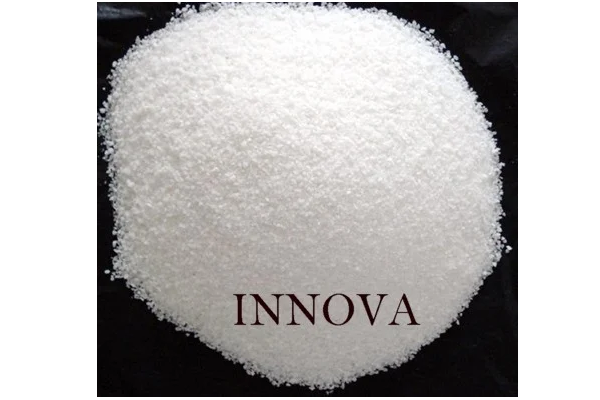
| Appearance | White to off-white powder / milky liquid |
| Type | Anionic / Cationic / Non-ionic polyacrylamide |
| Molecular Weight | 5 – 20 million Daltons |
| Charge Density | 10% – 50% (varies by product) |
| pH (1% solution) | 4.0 – 8.0 |
| Shelf Life | 24 months from manufacture (powder) |
Dosage depends on the suspension characteristics, suspended solids and dewatering equipment. Indicative ranges:
Exact dosage is confirmed after a jar test on your suspension sample. We work with your plant engineer or ETP operator to run the test and recommend the right polymer and dosage.
Polymer selection is not a one-time decision. Suspension characteristics change with production, season and raw material. Our technical team reviews your suspension sample, current dosing and dewatering equipment, then recommends the right polymer and dosage. For Hyderabad ETPs, we provide on-site support for jar tests and trial runs.
Q. Which polyelectrolyte is used for ETP sludge dewatering?
The choice depends on the sludge type. Cationic polyelectrolytes work well for organic sludge, while anionic polyelectrolytes are used for inorganic sludge and mineral suspensions. Final selection is confirmed after a jar test on your sludge sample.
Q. What is the difference between anionic and cationic PAM?
Anionic PAM carries a negative charge and is used for inorganic sludge, mineral processing and paper mills. Cationic PAM carries a positive charge and is used for organic sludge, ETP sludge dewatering and food processing effluent.
Q. What is the dosage of polyelectrolyte?
Dosage depends on the sludge characteristics and suspended solids. Typical ranges: ETP primary clarification 1-5 ppm, sludge dewatering 3-10 ppm. Final dosage is confirmed after a jar test on your sample.
Q. Do you supply polyelectrolyte in bulk to Hyderabad?
Yes, we supply in 25 kg bags and 50 kg bags. Bulk quantities are available for Hyderabad ETP plants and industrial units on request.
Share your suspension characteristics, current dosing and dewatering equipment. Our technical team will recommend the right polyelectrolyte and dosage for your plant.
Or call +91-9312871070
© 2026 Innovacorp India Pvt Ltd. All Rights Reserved. Managed & Developed by Innova Corporate India
 Chat with Us