
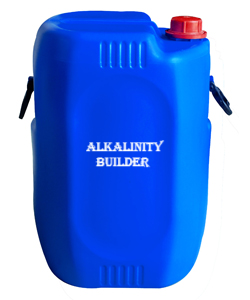
A sugar mill's clarification line is where the crop's value is either protected or lost. Raw juice arrives acidic, carrying organic acids that pull pH down and set the stage for sucrose inversion. If the pH is not corrected before liming and clarification, sucrose breaks down into glucose and fructose — sugar you cannot recover. Innovacorp supplies alkalinity builder for sugar processing in Jaipur to help juice pH reach the range where clarification works and inversion is minimized. The product is not a generic pH booster. It is a targeted alkali for the juice clarification stage, and its dose should follow your juice chemistry, not a fixed number.
Raw sugarcane juice has a natural pH around 5.2 to 5.4, driven largely by organic acids, with acetic acid making up a significant portion. At this pH, sucrose is vulnerable to acid-catalyzed inversion — the breakdown into glucose and fructose that reduces recoverable sugar. The clarification process exists partly to raise pH and remove impurities before evaporation, but the order and method matter.
In conventional defecation, lime (calcium hydroxide) is added to the juice. The lime provides calcium ions that react with phosphate and other impurities to form flocs, which sweep suspended solids out of the juice. But lime addition alone does not solve the pH problem cleanly. If the starting pH is too low, the lime dose needed to reach the target range can be higher, and the residual calcium carryover into clarified juice increases.
Higher target pH in clarified juice invariably means more residual calcium ions carry through. This is not a minor detail. Residual calcium contributes to scaling in evaporators and crystallization pans, and it can catalyze sucrose hydrolysis, effectively undoing the protection that pH control was meant to provide.
The aim is not "the highest pH possible." It is the right pH range — high enough to minimize inversion, low enough to keep residual calcium under control. This is where a dedicated alkalinity builder differs from simply adding more lime. The builder adjusts the pH environment before or alongside liming, so the clarification system can work with less lime and produce clarified juice with less calcium carryover.
The dosing point depends on your clarification scheme. In a typical cold or intermediate liming process, the builder is introduced to the raw juice before or at the liming stage. The goal is to establish a pH baseline that the lime can then work with efficiently.
Your process team should confirm the dosing point and target pH against your juice analysis. A dose that works in one mill's clarification scheme may not transfer directly to another.
Most chemical suppliers will quote a price against a product name. The harder part is matching the product to your juice chemistry and your clarification setup — and being honest when a trial is needed first.
What we actually do:
What we do not claim: "best alkalinity builder," "guaranteed sugar recovery," or "zero scaling." Those are not specifications, and they do not help you run a clarification line.
Alkalinity builders for sugar processing are supplied in grades suited to different dosing systems and process stages. The selection depends on:
Exact grade selection is confirmed against your process details. TDS is available on request.
| Property | Typical Value |
|---|---|
| Appearance | Liquid or powder (grade-dependent) |
| Active Content | Grade-dependent; confirmed on TDS |
| pH (as supplied or in solution) | Grade-dependent; confirmed on TDS |
| Density (liquid grades) | Grade-dependent; confirmed on TDS |
| Dosage | Confirmed against juice pH and process stage |
| Shelf Life | Grade-dependent; confirmed on TDS |
Final specification and dose confirmed against your juice analysis. TDS available on request.
Dosage depends on the raw juice pH, the buffering capacity of the juice, and the target pH for your clarification scheme. There is no single kilogram figure that works across mills.
The most common mistake we see in enquiries is treating the alkalinity builder as a direct substitute for lime, or dosing it to a fixed pH set point without checking the clarified juice calcium level. The builder is a pH adjustment tool, not a clarification chemical on its own. It works with your lime and flocculant programme, not instead of them.
If your mill has never used a separate alkalinity builder, the useful first step is a bench trial: measure raw juice pH, dose the builder to a target range, then run the standard liming and clarification sequence and check clarified juice pH and calcium. The result tells you whether the builder reduces lime demand or improves clarified juice quality in your specific setup.
Standard industrial packing is used for bulk supply. Pack sizes and format are shared on request. Store in a cool, dry place away from direct sunlight and strong oxidizers. Liquid grades should be protected from freezing. Keep containers sealed until use.
We work with sugar mill process teams on alkalinity builder selection and dose guidance. That means reviewing your juice pH data, your clarification scheme, and your target clarified juice quality before suggesting a dose. We do not claim on-site support unless it has been confirmed for your location. What we can do is review your process data and tell you whether the builder fits your clarification line or whether a different approach makes more sense.
The alkalinity builder is typically dosed into the raw juice before or alongside liming. The goal is to bring the juice pH into the range where lime reacts effectively with impurities and sucrose inversion is minimized. The exact dosing point depends on your clarification scheme (cold, intermediate, or hot liming) and should be confirmed with your process team.
Low pH increases the rate of sucrose inversion, which converts sucrose into glucose and fructose. This is a direct loss of recoverable sugar. Acidic conditions also affect the performance of lime and flocculants in clarification. Alkalinity builders help bring the pH up before these losses become significant.
No. Over-alkaline conditions also cause problems. Higher target pH can increase residual calcium ions in clarified juice, which contributes to evaporator scaling and can catalyze sucrose degradation. The aim is the right pH range, not the highest pH. The optimal set point depends on your juice composition and clarification process.
Standard industrial packing is used for bulk supply. Pack sizes and format are shared on request. Store in a cool, dry place away from direct sunlight and strong oxidizers. Keep containers sealed until use.
Call +91-9312871070 to discuss your Jaipur sugar processing application. Tell us your juice pH, clarification scheme, and the problem you are trying to solve — we will tell you whether the alkalinity builder fits.
© 2026 Innovacorp India Pvt Ltd. All Rights Reserved. Managed & Developed by Innova Corporate India
 Chat with Us