
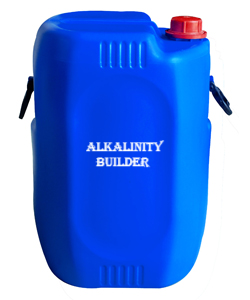
Australia's 21 sugar mills process around 30 million tonnes of cane each crush, most of it in Queensland's Mackay, Burdekin, Herbert, and Bundaberg regions. At the clarification station, the pH set point determines how much lime saccharate is needed, how well flocs settle, and how much calcium carries into the evaporators. Innovacorp supplies alkalinity builders to Australian mills looking for tighter pH control across this step.
Mixed juice arrives at clarification with natural acidity that varies through the crush season. The target is usually a mixed juice pH around 7.5, which after heating and evaporation settles to a syrup pH near 6.5 — the range where sucrose inversion is minimized and crystallization behaves predictably.
Australian mills typically use lime saccharate rather than milk of lime. It provides free calcium ions that help form calcium phosphate flocs, which sweep suspended solids and colour bodies out of the juice. The drawback is residual calcium: too much of it carries through to the evaporators and forms scale on tube surfaces. An alkalinity builder helps hold pH within the target band without pushing lime saccharate rates higher than necessary.
The practical dosing point is ahead of or alongside lime saccharate addition, before flash heating and flocculant dosing. The product works by:
Alkalinity builders for sugar clarification come in different forms depending on mill setup:
Selection depends on existing lime saccharate preparation, available dosing points, and target pH control range. TDS covers specific product grades.
| Parameter | Typical Range |
|---|---|
| Appearance | Clear to slightly turbid liquid or white powder |
| pH (as supplied, liquid grades) | Alkaline |
| Active content | Grade dependent |
| Density (liquid grades) | Application dependent |
| Shelf life | 12–24 months in unopened packaging |
Values are indicative. Final specification confirmed against TDS and plant trial.
Dosage is expressed in ppm on mixed juice, set against incoming juice pH, lime saccharate rate, and target clarified juice pH. Starting ranges are mill-specific — a plant trial is the reliable way to establish the right rate before full-scale dosing. Overdosing can push pH above the optimal band and increase colour formation; underdosing leaves pH unstable and lime consumption erratic. TDS covers typical ranges and trial guidance.
Standard industrial packing: liquid grades in drums or IBCs; powder grades in multi-wall bags. Pack sizes on request.
We work with mill process teams on dosage setup and pH control strategy. TDS available on request. No on-site claim is made unless confirmed.
Q: What pH should mixed juice target in an Australian sugar mill?
A: Mixed juice is typically raised to around pH 7.5 to achieve a syrup pH of 6.5 after heating, clarification, and evaporation losses. The exact set point depends on cane quality and mill configuration, so routine adjustment against clarified juice pH is standard practice.
Q: How does alkalinity builder work with lime saccharate?
A: Lime saccharate raises juice pH and forms calcium phosphate flocs for clarification. An alkalinity builder supports this by stabilizing pH within the target band, reducing lime consumption swings, and helping control residual calcium carryover that contributes to evaporator scaling.
Q: Why does residual calcium cause problems in Australian mills?
A: Excess calcium from lime saccharate carries into clarified juice and can precipitate as scale on evaporator tubes, reducing heat transfer and requiring cleaning stops. Mills using alternative or supplementary alkaline agents aim to reduce this carryover while maintaining clarification performance.
Q: What dosage of alkalinity builder is typical for juice clarification?
A: Dosage depends on incoming juice acidity, lime saccharate rate, and target pH. It is set in ppm on juice and adjusted against clarified juice pH and residual calcium. TDS covers starting ranges; a plant trial is recommended before full-scale change.
Call +91-9312871070 to discuss your mill's clarification pH control.
© 2026 Innovacorp India Pvt Ltd. All Rights Reserved. Managed & Developed by Innova Corporate India
 Chat with Us