
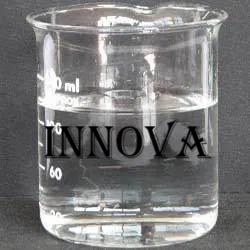
Hydrogen peroxide is an effective oxidising disinfectant, but its weakness is that it breaks down quickly. Once it decomposes into water and oxygen, there is nothing left to inhibit microbial regrowth. Silver-stabilized hydrogen peroxide addresses that limitation. The silver ions slow the decomposition of the peroxide and leave a trace residual that continues to suppress microbial activity after the initial oxidation has done its work. In Australian industrial water systems, food processing plants, and pipeline networks where biofilm regrowth between treatments is a persistent problem, that residual effect is the practical difference between a treatment that works and one that has to be repeated constantly. Innovacorp supplies silver hydrogen peroxide for these applications. This page covers how the chemistry works, where it fits, how to use it, and what to check when biofilm control is not performing.
Silver hydrogen peroxide is a two-component system. The hydrogen peroxide is the primary oxidant. It attacks microbial cell membranes and disrupts cellular function through oxidation. The silver ions work through a different mechanism: they bind to proteins and enzymes in microbial cells, interfering with DNA replication and metabolic processes. The combination of the two mechanisms is more effective than either component alone, and the silver ions provide a residual effect that plain peroxide cannot.
The decomposition pathway is important for understanding the product's behaviour. Hydrogen peroxide breaks down into water and oxygen. The silver ions remain in solution at low concentration. They are not consumed in the same way as the peroxide, so they continue to provide microbial inhibition until they are diluted out or removed by the system's blowdown or flushing. This residual is why silver hydrogen peroxide is used for biofilm control in pipelines and water systems where a one-off treatment would not be sufficient.
It is important to be precise about what the product does and does not do. It is a disinfectant, not a sterilant in the absolute sense. It reduces microbial load and controls biofilm, but it does not guarantee the elimination of every organism in every application. Claims about "zero residue" need qualification: silver remains as a trace residual, and while it is at low concentration, it is still present. The product is not a replacement for proper cleaning and process hygiene in food processing environments.
Water systems and pipelines. Biofilm in water distribution lines, cooling water circuits, and process water systems reduces flow, harbours pathogens, and can cause microbiologically influenced corrosion. Silver hydrogen peroxide is dosed into the system to oxidise the biofilm matrix and inhibit regrowth. The residual silver effect is particularly useful in systems that are not continuously treated, because it extends the interval between doses.
Food processing surfaces and equipment. Silver hydrogen peroxide can be used for surface disinfection in food processing environments. In Australia, food processing aids are regulated under the FSANZ Food Standards Code, and hydrogen peroxide is permitted as a processing aid with a maximum residue level of 5 mg/kg in foods [citation:5]. However, disinfectant claims for food-contact surfaces may also fall under APVMA regulation depending on the specific claims made [citation:4]. Buyers should confirm the regulatory status of the specific product and application with their compliance team.
Cooling towers and industrial water circuits. Microbial growth in cooling water systems reduces heat transfer efficiency and can cause fouling and corrosion. Silver hydrogen peroxide can be used as part of a microbial control programme, either alone or in rotation with other biocides to prevent resistance development.
Wastewater and effluent treatment. Silver hydrogen peroxide can be used for disinfection of treated effluent before discharge. The residual silver effect can help maintain low microbial counts in storage or distribution systems downstream of the treatment point.
Application note: In sugar processing, silver hydrogen peroxide is used for microbial control in process water and sanitation applications. The product described here is an industrial disinfectant, not a sugar-processing aid. For biological wastewater treatment where the issue is organic load rather than disinfection, our microbial culture for ETP and STP bioaugmentation page covers the biological treatment side.
Silver hydrogen peroxide products vary in concentration and silver content. Selection depends on the application:
For food processing applications, the product must be suitable for the intended use and must comply with the relevant food safety standards. The technical datasheet should be reviewed before selection.
Dosage depends on the application, the microbial load, and the product concentration. Typical approaches:
Application considerations:
Final dosage should be confirmed after reviewing the system characteristics and the product TDS.
If biofilm regrowth continues despite treatment, the cause may not be the dose:
| Property | Typical Value |
|---|---|
| Appearance | Clear, colourless liquid |
| Hydrogen peroxide content | As per grade (e.g., 3%, 5%, 35%) |
| Silver content | As per grade (ppm level) |
| pH (as supplied) | Acidic (grade dependent) |
| Density | ~1.0 – 1.1 g/cm³ |
| Shelf life | TDS on request |
Final specifications depend on grade. TDS available on request. Regulatory requirements depend on the intended use and should be confirmed before application.
Standard industrial packing. Pack sizes on request.
Innovacorp can review your system characteristics and microbial control programme to identify potential improvements. For plants where disinfection is part of a broader water treatment programme, our membrane chemicals for RO and cooling systems page covers CIP cleaners and maintenance chemicals, and our pH booster for cooling water systems page covers pH control in cooling circuits. We work with your operations team to select the right product grade and dose. Final application decisions and regulatory compliance remain with your facility.
Silver ions interact with hydrogen peroxide in solution to slow its natural decomposition rate. This extends the product's shelf life and provides a residual antimicrobial effect after the initial peroxide oxidation has occurred. The silver ions themselves remain in solution and continue to inhibit microbial regrowth at low concentrations.
Plain hydrogen peroxide decomposes relatively quickly into water and oxygen, leaving no residual activity. Silver-stabilized hydrogen peroxide decomposes more slowly and leaves a trace silver residual that provides ongoing microbial inhibition. This makes it useful for water systems and pipelines where biofilm regrowth is a concern between treatments.
Silver hydrogen peroxide can help remove biofilm by oxidising the organic matrix that holds the biofilm together, while the silver ions penetrate and disrupt microbial cells within the biofilm. However, heavily fouled systems may need mechanical cleaning or a higher concentration shock dose before a maintenance programme can be effective.
Regulatory requirements depend on the intended use. Disinfectant claims for agricultural, veterinary, or food-contact applications may fall under APVMA regulation. Food processing aids are covered by FSANZ standards. Buyers should confirm the specific regulatory pathway for their application with their compliance team before use.
Call +91-9312871070 to discuss your silver hydrogen peroxide requirement.
© 2026 Innovacorp India Pvt Ltd. All Rights Reserved. Managed & Developed by Innova Corporate India
 Chat with Us