
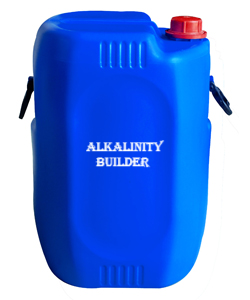
A boiler operator at a metal-finishing unit in the Ballabhgarh cluster usually notices the problem from the blowdown sample, not from a gauge: the boiler water pH has drifted below the working window, and the feedwater line is starting to show pitting. In a unit running a 2–10 TPH boiler on variable feedwater, that drift can happen within a week of a softening resin change. Innovacorp supplies alkalinity builder for boilers in Ballabhgarh metal, plating and heat-treatment units, and the dose is set against your boiler water test, not against a fixed catalogue number.
The Ballabhgarh industrial cluster is dominated by metal units — roughly 61% of the registered units — with automobile, plastics and textile units making up most of the rest. Metal extraction, casting and plating lines use steam for pickling, cleaning and heat treatment, and the boilers that serve them are mostly small: Faridabad district data shows a major concentration of small boilers, with nearly half falling in the 2–10 TPH band. Small boilers on variable feedwater are exactly where pH control drifts, because the softening and deaeration steps are often simpler than on a large utility boiler.
Alkalinity builder raises and holds the alkalinity of the boiler water so the pH stays in the mildly alkaline window. Technical references commonly place that window between pH 10 and 11.5. Below pH 10, boiler metal is more prone to pitting and dissolution; above pH 11.5, the risk shifts to carry-over of boiler water into steam and to caustic embrittlement at stressed joints. The builder is not a scale remover and not a corrosion inhibitor on its own; its job is to hold the pH and alkalinity baseline that the rest of the treatment programme depends on.
Acidic corrosion starts when the boiler water or feedwater pH falls below the working window, and the metal surface is attacked rather than protected. Caustic embrittlement is the opposite risk: when boiler water alkalinity runs too high, sodium hydroxide concentrates in hairline cracks and at riveted or stressed joints, dissolves the surrounding iron, and causes intercrystalline cracking. A metal unit in the Ballabhgarh cluster that has just changed its softening resin or feedwater source is the most likely to swing from one failure mode toward the other, which is why the boiler water test, not the dosing pump setting, should drive the dose.
On most small industrial boilers the builder is dosed into the feedwater line downstream of the softener and deaerator, or directly into the boiler drum through a chemical dosing pump. The feedwater line is the usual choice where the unit wants the chemical mixed before the boiler, and drum dosing is used where the boiler has a dedicated chemical injection port. In either case the target is the same: a boiler water pH inside the working window and an alkalinity that is high enough to protect the metal but not so high that caustic concentration becomes a risk.
The builder is supplied as a formulated alkaline liquid, and the working dose is expressed in ppm of boiler water or feedwater, depending on the dosing point. The exact dose for your boiler is set from the boiler water test — pH, total alkalinity, and where relevant the caustic alkalinity — and from the TDS for the grade. A plating-line boiler and a heat-treatment boiler in the same Ballabhgarh unit can share one grade but often need separate dose targets, because their feedwater quality and operating pressure differ.
Grade-specific values (appearance, pH of the concentrate, active content, density, shelf life) are shared against your boiler duty. The final specification is confirmed from the TDS and a boiler water test. TDS on request.
Standard industrial packing; pack sizes on request.
The first mistake is dosing by habit rather than by test: a unit keeps the same pump setting after changing its feedwater source, and the boiler water pH drifts out of range without anyone noticing until the blowdown sample is tested. The second is treating alkalinity builder as a cure for scale; it is not, and scale from hardness has to be handled by softening, not by adding more builder. The third is ignoring the upper end of the pH window, which is where caustic embrittlement risk begins. A weekly boiler water test, read against the working window, catches all three before they become a repair.
Our team works with your boiler operator on dose setting and boiler water test interpretation. Final specification is confirmed from the TDS and a boiler water test on your unit.
What boiler water pH range should an alkalinity builder hold in a Ballabhgarh unit?
Boiler water is usually held in a mildly alkaline range to reduce acidic corrosion, and technical references commonly place the working window between pH 10 and 11.5. Below that window the boiler metal is more prone to pitting and dissolution, and above it the risk of carry-over and caustic embrittlement rises. The exact setpoint for your boiler is confirmed from the TDS and your boiler operating pressure, not from a single number.
How is alkalinity builder dosed into a small boiler?
Alkalinity builder is usually dosed into the feedwater or directly into the boiler drum, depending on the boiler layout and the dosing pump available. The dose is set to hold the target pH and alkalinity in the boiler water, and is confirmed through a boiler water test after the first dosing cycle. The working range is confirmed from the TDS for your grade and your boiler water test.
Can the same alkalinity builder be used for a plating line boiler and a heat-treatment boiler in Ballabhgarh?
Often the same grade family works, but the dose and the target pH can differ because the two boilers may run at different pressures and see different feedwater quality. Plating and metal-finishing units in the Ballabhgarh cluster often run small boilers with variable feedwater, while heat-treatment boilers may run more steadily. Innovacorp can supply one grade and help you set separate dose targets for each boiler.
What happens if the boiler water pH goes above the recommended range?
If boiler water pH rises above the recommended window, the risk of caustic embrittlement and carry-over increases. Caustic embrittlement is a cracking failure that starts at stressed joints and rivets, and it is linked to high caustic concentration in the boiler water. The remedy is to bring the alkalinity back into range and to check the feedwater and softening setup, not to keep adding more alkalinity builder.
For dose setting, boiler water test interpretation or a grade selection for your Ballabhgarh unit, call +91-9312871070. Our team works with your boiler operator on the dosing point and the final specification.
© 2026 Innovacorp India Pvt Ltd. All Rights Reserved. Managed & Developed by Innova Corporate India
 Chat with Us