
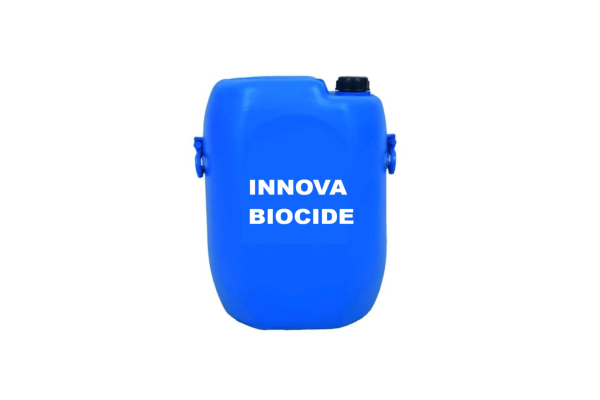
A distillery fermentation operator in the Ballabhgarh belt usually sees the first sign as a slower gravity drop, not as a bacterial count. By the time the fermenter is taking longer to reach the target alcohol level, the Lactobacillus population has already converted part of the sugar into lactic acid, and the yeast is competing with a contaminant that grows faster than it does. Innovacorp supplies fermentation biocide for Ballabhgarh distilleries and yeast propagation units, and the grade is picked against the contaminant, not against a catalogue number.
In a distillery that ferments molasses or cane juice, the bacterial load comes in with the raw material and builds through the propagation train. Lactobacillus and Leuconostoc are the common contaminants, and they do two things that hurt yield: they convert sucrose into lactic acid and dextran, and they compete with the yeast for the available sugar. In the Ballabhgarh cluster, the newer distillery and bottling units sit alongside the metal and textile units that make up most of the industrial base, so a fermentation biocide programme here is usually a standalone unit operation rather than part of a larger sugar complex.
The biocide used in fermentation has to do something the cooling water biocide does not: it has to act on the bacterial contaminant without inhibiting the yeast that is doing the fermentation. That is why non-oxidising biocides are usually the first choice for this duty. Activated aldehydes and quaternary ammonium compounds act on the bacterial cell surface and the biofilm, while the yeast remains active. Oxidising biocides can be used for cleaning and sanitising the fermenter between batches, but they are not the usual choice for in-fermentation dosing because they do not discriminate between the contaminant and the culture.
The dose is expressed in ppm of the fermentation volume. For continuous protection, the biocide is dosed into the fermenter or the yeast propagation tank through a metering pump. For a shock treatment, it is slug-dosed at the start of the cycle or when the bacterial count crosses a set threshold. The working dose for your fermenter is confirmed from the TDS and a trial on your fermentation broth, because the microbial load, the yeast strain and the raw material all affect the result. A dose that works on one broth may be too low or too high on another.
The biocide acts on the bacterial cell surface and on the extracellular matrix that holds the biofilm together in the fermenter and the propagation train. Once the bacterial population is knocked back, the yeast has a clearer run at the sugar, the gravity drop returns to its expected rate, and the lactic acid load in the broth falls. The effect is not permanent; the bacterial load rebuilds with each new batch of raw material, which is why the dosing has to be part of the batch routine rather than a one-time treatment.
Grade-specific values (appearance, active content, pH, density, shelf life) are shared against your fermentation duty. The final specification is confirmed from the TDS and a trial. TDS on request.
Standard industrial packing; pack sizes on request.
The first mistake is overdosing and inhibiting the yeast along with the contaminant, which shows up as a stuck fermentation rather than a cleaner one. The second is treating the fermenter but not the propagation train, so the contaminant is re-introduced with every new yeast batch. The third is using a cooling water biocide in the fermenter because it is already on site, when the two duties need different chemistry. A trial on the actual broth, with a before-and-after bacterial count and a gravity curve, settles all three before a full plant change.
Our team works with your fermentation team on grade selection, dosing point and trial design. Final specification is confirmed from the TDS and a trial on your fermentation broth.
Which biocide is used for bacterial control in ethanol fermentation?
Ethanol fermentation bacterial control often uses non-oxidising biocides such as activated aldehydes or quaternary ammonium compounds, selected because they act on Lactobacillus and Leuconostoc without inhibiting the yeast. The exact grade and dose are confirmed from the TDS and a trial on your fermentation broth, because the microbial load and the yeast strain both affect the result.
How is fermentation biocide dosed in a distillery?
Fermentation biocide is usually dosed into the fermenter or the yeast propagation tank, either continuously during the fermentation cycle or as a slug dose at the start. The dose is expressed in ppm of the fermentation volume, and the working range depends on the bacterial load and the yeast strain. The exact dose is confirmed from the TDS and a trial on your fermentation broth.
Can one biocide serve the fermenter and the cooling water circuit in a Ballabhgarh distillery?
Often not the same grade. Fermentation biocide has to act on the bacterial contaminant without inhibiting the yeast, while cooling water biocide has to control biofilm and algae in the recirculating water. Innovacorp can supply separate grades for the two duties and help you keep the dosing points separate.
What handling care does fermentation biocide need in a distillery?
Fermentation biocide should be stored in closed containers away from heat and direct sunlight, and handled with gloves and eye protection. Do not mix concentrates in unmarked containers, and follow the TDS for shelf life and compatibility with the yeast. Spills should be contained and disposed of as per the SDS, not flushed to the drain.
For grade selection, dosing point design or a trial on your fermentation broth, call +91-9312871070. Our team works with your fermentation team on the trial protocol and the final specification.
© 2026 Innovacorp India Pvt Ltd. All Rights Reserved. Managed & Developed by Innova Corporate India
 Chat with Us