
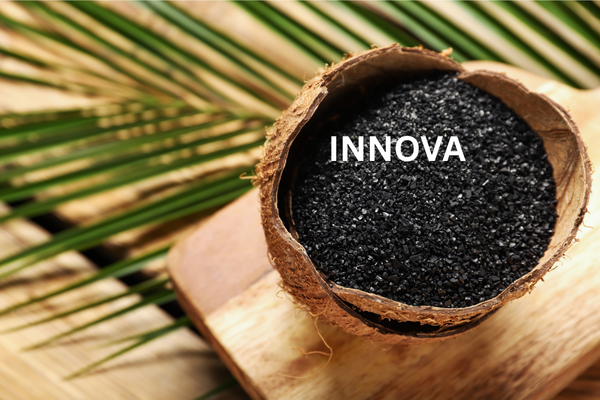
Dehradun's industrial identity is built around its pharmaceutical cluster at Selaqui and its food processing units. For these facilities, purification sits directly on the quality control line. Activated carbon, in granular and powdered forms, handles three jobs here: removing color bodies and organic impurities from pharma process streams, decolorizing food liquids, and polishing water before discharge into a groundwater-dependent valley.
Selaqui and the surrounding Pharma City area host a dense concentration of formulation and API units. For these plants, activated carbon performs two distinct jobs. Powdered carbon is dosed into reaction vessels to adsorb color bodies and degradation products during workup. Granular carbon is packed into columns for continuous polishing of process water and solvent recovery.
The Doon Valley context adds another layer. A large share of the valley's drinking water comes from groundwater. When a pharma ETP discharges into this setting, carbon polishing is not just about meeting discharge norms — it is about protecting a shared aquifer. GAC columns downstream of biological treatment remove residual dissolved organics that conventional ETP stages leave behind.
The choice between GAC and PAC depends on where in the process the carbon sits and what contact time is available.
In a pharma formulation unit, PAC is added during workup after reaction completion. The carbon adsorbs colored impurities before crystallization or drying. For water treatment, GAC sits downstream of the ETP's biological stage — after BOD and COD have been reduced, but before final discharge or reuse. This placement lets the carbon focus on dissolved organics and trace color rather than competing with high organic loads.
Food processing units follow a similar logic but with different contact times and color bodies. The next section covers that separately.
Dehradun's food manufacturers work with liquid streams where color is soluble and adsorption is the most direct removal route. Edible oil refining is a common case: crude or partially refined oil carries pigments such as carotenoids and chlorophyll, along with trace oxidation products. PAC is dosed into the oil at the bleaching stage, stirred for a defined contact time, and then filtered out. The carbon dose and mesh cut are selected against the oil's color body concentration and the filtration setup available at the plant.
Other food streams — liquid extracts, syrups, and ingredient concentrates — follow the same batch-dosing pattern. GAC is used when the stream runs continuously and a packed bed is more practical than repeated batch dosing. In both cases, the starting point is a lab trial on the actual stream, because food color bodies vary widely in molecular size and adsorb differently on the same carbon grade.
Premature breakthrough in GAC columns. When the carbon bed is undersized for the organic load, or when backwashing is infrequent, the mass transfer zone moves down the column faster than expected. The fix is not always more carbon — sometimes it is better pretreatment upstream so the carbon sees a lighter load.
pH shift with unwashed carbon. Fresh activated carbon can raise the pH of the first few bed volumes. For pharma streams with tight pH specifications, acid-washed carbon reduces this effect and cuts the rinse water volume needed before the bed is brought online.
Fines in PAC dosing. Very fine PAC can pass through filter media or create dust handling issues. Specifying the right mesh cut — and confirming it against the facility's filtration setup — avoids downstream turbidity problems.
| Parameter | Typical Range (GAC) | Typical Range (PAC) |
|---|---|---|
| Appearance | Black granules | Black powder |
| Iodine value | 900–1100 mg/g | 800–1000 mg/g |
| Mesh size | 8×16, 8×30, 12×40 | 200–325 mesh |
| Moisture | ≤5% | ≤8% |
| Ash content | ≤5% (acid-washed lower) | ≤8% |
| pH (slurry) | 8–10 (acid-washed: 5–7) | 6–9 |
Ranges shown are typical commercial grades, not a guaranteed specification. Final values are confirmed against the sample lot and shared as TDS before order confirmation.
PAC dosing: Typical dosage ranges from 0.05% to 0.30% on the weight of the process stream, depending on the color body concentration. In pharma API workup, the carbon is added to the reaction vessel after pH adjustment, stirred for 30–60 minutes, and then filtered. In food decolorization, dosage is often lower because the color load is less complex — a starting trial at 0.05% is common, with adjustment based on the residual color after filtration.
GAC column design: Empty bed contact time (EBCT) is the key parameter. For water polishing downstream of ETP, an EBCT of 10–15 minutes is a practical starting point. For dechlorination before RO, a shorter bed with higher flow rate can work because the chlorine demand is low. The actual bed depth and flow rate should be sized against the facility's peak water demand, not the average.
Activated carbon is supplied in standard industrial packing. Pack sizes and material options are confirmed against the facility's handling setup before dispatch.
Dehradun's monsoon humidity is a real storage concern. Once a bag is opened, the carbon begins adsorbing moisture from the air, which occupies adsorption sites before the carbon even reaches the process. Keep bags sealed until use, store them in a covered dry area, and reseal partially used bags tightly.
Carbon selection for pharma and food applications is rarely settled by datasheet alone. The iodine value tells you the pore volume, but it does not tell you whether the carbon will remove your specific color body or impurity. A lab trial with the actual process stream — even a small one — is the most reliable way to fix the grade and dosage before a full batch commitment.
We shortlist grades based on your stream chemistry and the contact time available at your plant.
For API purification in Dehradun pharma units, acid-washed or iron-free powdered activated carbon is typically selected. The exact grade depends on the solvent system and the impurity profile. Lab trial with your actual process stream is recommended before final selection.
GAC columns remove dissolved organic matter, residual chlorine and taste-odor compounds from process water. In Doon Valley, where a large share of drinking water comes from groundwater, GAC polishing before discharge or reuse supports discharge norms and protects the local aquifer.
For food processing decolorization, iodine values in the 800 to 1000 mg/g range are commonly used. The selection depends on the color body type and the contact time available. A sample trial with your specific food stream is advised.
Store activated carbon in its original sealed packaging in a dry, covered area away from direct moisture. Once a bag is opened, reseal it tightly. Dehradun's monsoon humidity can reduce adsorption capacity if carbon is left exposed.
Send your process stream sample for a lab trial, or request TDS and sample lot data for the grade you are considering. Call +91-9312871070 to discuss the stream chemistry and we will shortlist the grade against your contact time and filtration setup.
© 2026 Innovacorp India Pvt Ltd. All Rights Reserved. Managed & Developed by Innova Corporate India
 Chat with Us