
Dehradun's industrial landscape is anchored by the Selaqui pharmaceutical cluster, with units manufacturing medicines, soft gelatin capsules, and pharmaceutical powders. Alongside pharma, the city has food processing, paper, packaging, footwear, and light engineering units. Each of these industries generates effluent that carries colour — from process chemicals, organic load, or dyes used in packaging and footwear. The state pollution control board requires ETP outlet analysis reports from notified laboratories as part of consent renewal, and colour is one of the parameters monitored. Colour precipitants and coagulant aids are the chemicals that bring dissolved colour bodies together into flocs that can be settled or filtered before discharge.
Colour in industrial effluent is not limited to textile dyeing. In Dehradun's pharma units, process streams and cleaning wastewater can carry coloured organic compounds. Food processing effluent carries colour from fruit and vegetable processing, and from cleaning chemicals. Paper mills discharge effluent with lignin-derived colour that is dark and recalcitrant. Footwear and packaging units use dyes and pigments that partially remain in wash water.
For each of these, the treatment approach is similar: a coagulant neutralizes the charge on colour-causing particles, and a flocculant bridges them into larger flocs that settle in the primary clarifier or are removed by filtration. The specific chemistry and dosage differ by effluent type, but the principle holds.
Selaqui is a recognised pharmaceutical cluster, with units manufacturing medicines, capsules, and powders. Pharma effluent contains organic solvents, process intermediates, and cleaning wastewater. While the primary treatment focus is on COD and BOD reduction, colour is also a monitored parameter. A pharma ETP that discharges into a common drain or water body must meet the prescribed limits, and colour is part of the outlet analysis report submitted for consent renewal.
For pharma effluent, the coagulant-flocculant combination is selected against the specific process stream. A unit manufacturing capsules may have a different effluent profile from one making tablets or liquid formulations. The jar test with the actual effluent is the starting point, not a generic product recommendation.
Food processing effluent in Dehradun carries colour from vegetable and fruit residues, and from cleaning agents. The organic load is high, and the colour bodies are often biodegradable but may persist through primary treatment. Coagulation aids the removal of suspended solids and colloidal colour before the biological stage.
Paper mills discharge effluent with lignin-derived colour that is more resistant to biological treatment. The colour in paper mill effluent comes from the pulping and bleaching process, and it can be dark brown to black. Coagulation with alum or polyaluminium chloride is commonly used as a primary treatment step, followed by flocculation to settle the colour-bearing solids. The dosage for paper effluent is typically higher than for food processing because the colour load is more concentrated.
The choice of coagulant depends on the effluent pH and the colour body. Alum works in a narrower pH range, while polyaluminium chloride is more forgiving. For some effluents, ferrous sulfate may be effective. The flocculant — typically a polyacrylamide — is selected for floc size and settling speed.
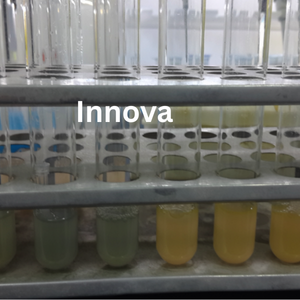
For Dehradun units, the practical approach is a jar test using the actual effluent. The test evaluates coagulant type, dose, pH adjustment, and flocculant dose against colour removal and settling performance. A product that works on one unit's effluent may not work on another's, even within the same industry.
| Parameter | Typical Range |
|---|---|
| Appearance | Clear to slightly coloured liquid |
| pH (concentrate) | Product-dependent |
| Specific gravity | 1.0–1.2 at 20°C, product-dependent |
| Dosage form | Liquid, dosed via chemical feed pump |
Ranges shown are typical for commercial colour precipitants and coagulant aids. Final values are confirmed against the sample lot and shared as TDS before order confirmation.
Colour precipitant dosage is set by a jar test on the actual effluent. The test determines the coagulant dose, the flocculant dose, and the pH at which colour removal is best. For industrial effluents, coagulant doses can range from 100 to 800 ppm, and flocculant doses from 1 to 20 ppm, depending on the colour load and the effluent chemistry. These are indicative ranges — the actual dose for a Dehradun unit is confirmed by the jar test.
Once the dose is set, the ETP dosing pumps are calibrated, and the outlet colour is monitored against the consent limits. If the effluent characteristics change — new product line, different raw material — the jar test is repeated.
Colour precipitants and coagulant aids are supplied in standard industrial packing. Pack sizes and material options are confirmed against the buyer's handling setup before dispatch. Store in a cool, dry area away from direct sunlight. Liquid products should be protected from freezing. Keep containers sealed when not in use.
Colour removal is not a fixed-dosage exercise. The effluent changes with production, and the existing ETP configuration affects performance. We review the effluent characteristics and the treatment train before recommending a product and dosage. For pharma units in Selaqui, food processing plants, and paper mills across Dehradun, a jar test with the actual effluent is the starting point.
Call +91-9312871070 to discuss your ETP colour problem and current treatment setup.
Pharma effluent colour removal depends on the process stream — capsule, tablet, or liquid formulation. Coagulant and flocculant combinations are selected by a jar test with the actual effluent. For Selaqui units, the starting point is the effluent analysis and a bench trial, not a generic recommendation.
The state pollution control board requires ETP outlet analysis reports from notified laboratories as part of consent renewal. Colour is one of the parameters evaluated. Colour precipitants help bring effluent colour within the prescribed limits, supporting the renewal process.
A coagulant neutralizes the charge on colour-causing particles so they can come together. A flocculant bridges these particles into larger flocs that settle or are filtered out. Both are used together, and the dosing sequence — coagulant first under rapid mixing, flocculant under slow mixing — affects performance.
Dosage is determined by a jar test using the actual effluent. The test evaluates coagulant type and dose, pH adjustment, and flocculant dose against colour removal and settling. Once set, the dose is confirmed in a continuous trial on the ETP.
Share your ETP outlet analysis and effluent characteristics. We will review the colour load, pH, and existing treatment train, and recommend a coagulant-flocculant combination for your specific effluent. Call +91-9312871070 to start the discussion.
© 2026 Innovacorp India Pvt Ltd. All Rights Reserved. Managed & Developed by Innova Corporate India
 Chat with Us