
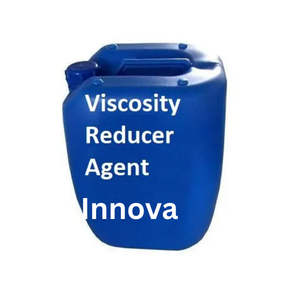
Innovacorp India is a manufacturer, exporter, and supplier of Viscosity Reducer Liquid to Tanzania — a surfactant-based pan boiling aid for sugar mills. Supplied to sugar mills across Tanzania, with export documentation and shipping support.
Anyone who has run a vacuum pan in Tanzania's sugar belt knows the problem: the massecuite gets heavy, circulation slows, heat transfer drops, and strike time stretches out. The same problem shows up downstream — in the centrifugals, where heavy massecuite makes molasses separation harder. Viscosity is not a single-number problem. It changes with brix, temperature, crystal content, and cane quality. A pan aid that works on one mill's C-massecuite may not suit another's A-boiling. The right product and dose are matched to the massecuite, not to a datasheet headline.
Tanzania's sugar mills — Kilombero, Mtibwa, Kagera, and the surrounding cane belt — run vacuum pans under conditions where massecuite viscosity directly affects throughput. High viscosity reduces circulation in the pan, which lowers the heat transfer coefficient (HTC) and stretches strike time. It also affects centrifugal performance — heavier massecuite makes molasses separation harder, which can affect crystal cleanliness and molasses purity. A viscosity reducer addresses both — by lowering surface tension and internal friction, it supports circulation in the pan and separation in the centrifuge.
Viscosity reducers are surfactant-based products. They work by modifying the rheological properties of high-brix massecuite — reducing the surface tension between the sugar crystals and the mother liquor, and lowering internal friction in the massecuite. The practical effect is better circulation in the vacuum pan, which supports heat transfer and can shorten strike time. In the centrifuge, lower viscosity supports molasses separation from the crystal. The specific effect depends on the massecuite condition — brix, temperature, crystal content, and purity — which is why dose is confirmed on a plant trial, not from a fixed recommendation.
| Product | Function |
|---|---|
| Viscosity Reducer Liquid (Standard) | Surfactant-based pan aid for massecuite circulation |
| Viscosity Reducer Liquid (Concentrated) | Higher active content for difficult massecuites |
Grade selection depends on your massecuite condition and pan operation — confirmed at the enquiry stage.
| Property | Typical Value |
|---|---|
| Appearance | Clear to pale liquid |
| Chemistry | Surfactant-based (grade-dependent) |
| Active Content | Grade-dependent; confirmed on datasheet |
| pH (as supplied) | Near-neutral to slightly alkaline, grade-dependent |
| Dosage Range | Typically 50–300 ppm on massecuite; confirmed on plant trial |
| Shelf Life | 12 months (unopened, cool dry storage), grade-dependent |
Final specification confirmed after a plant trial on your massecuite.
Dosage depends on the massecuite condition, pan operation, and product grade. Typical starting guidance for Tanzania mills:
We recommend a plant trial before establishing the dose. Final dosage is confirmed with your process engineers.
We work with sugar mill process engineers and pan operators in Tanzania on product selection, dosing, and application. The starting point is a review of your massecuite conditions — brix, temperature, crystal content, and purity — followed by a recommended dose and, where required, a plant trial. Export documentation and shipping coordination are handled for Tanzania.
Yes. We export viscosity reducer liquid to Tanzania — pan boiling aids for sugar mills — with export documentation and shipping support. Port of discharge and shipping terms are confirmed at the quotation stage.
Viscosity reducers are surfactant-based products that lower the surface tension of the massecuite, supporting circulation and heat transfer in the vacuum pan. This helps shorten strike time and supports crystal growth. The exact dose and performance depend on the massecuite condition — confirmed after a plant trial.
Lower massecuite viscosity supports separation of molasses from sugar crystals in the centrifuge, which can help with crystal cleanliness and moisture content. The specific benefit depends on the massecuite condition and centrifuge operation — confirmed on a plant trial.
Viscosity reducer is shipped as a liquid in HDPE drums and jerry cans, with export documentation handled for Tanzania. Shipping terms, port of discharge and lead time are confirmed at the quotation stage.
For pricing, samples, or a technical discussion on Viscosity Reducer Liquid for your Tanzania sugar mill, call us at +91-9312871070. Our team will help you select the right grade for your massecuite.
© 2026 Innovacorp India Pvt Ltd. All Rights Reserved. Managed & Developed by Innova Corporate India
 Chat with Us