
Boilers in and around Agartala — in tea processing, food units and general industrial plants — tend to fail on the water side before they fail on the fuel side. Low or drifting pH in the boiler water is one of the quiet causes: it eats into the protective oxide layer, opens the door to oxygen pitting, and shows up as tube failures months later.
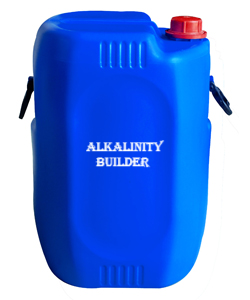
Innovacorp India manufactures and supplies alkalinity builder for boiler water treatment in Agartala, a formulated product that raises and buffers boiler water alkalinity together, rather than just pushing pH up. The product is also used in sugar processing for juice clarification, but that is a different application; on this page we are addressing the boiler side, because that is what Agartala's industrial base actually runs.
Feedwater chemistry decides how a boiler behaves, and Agartala's water has two features that work against pH stability: it tends to be low in natural alkalinity, and it varies with the season. When feedwater alkalinity is low, the boiler water pH can drift downward between blowdowns, and the protective magnetite layer on the tube surface becomes less stable.
The practical result is oxygen pitting — small, deep pits that start under deposits or in low-flow areas and grow into tube failures. Carbonic acid corrosion, driven by dissolved CO₂ carried over from the feedwater, adds to the problem in the condensate return lines. An alkalinity builder is one part of the answer; it works together with oxygen control, not instead of it.
The treatment programme has three stages, and alkalinity control sits in the middle one:
Getting the stage right matters. Dosing an alkalinity builder into the feedwater without checking boiler water alkalinity, for example, can push the boiler into the caustic embrittlement range at high pressure.
This is a selection question we get often, and the answer depends on how stable your feedwater is:
A common mistake is switching to caustic soda to save cost, then finding the boiler water pH swinging between blowdowns. The other common mistake is using an alkalinity builder without a water analysis, so the dose is set by guesswork. Both end in the same place: unstable pH and tube problems that get blamed on the chemical.
The alkalinity builder is supplied as a liquid, which is the usual form for boiler dosing because it mixes easily and can be fed by a dosing pump. Grade selection depends on boiler pressure, feedwater quality and the rest of the treatment programme. Where a plant needs a specific active content or a blend with an oxygen scavenger, we discuss that separately rather than folding it into a general product claim.
| Parameter | Details |
|---|---|
| Form | Liquid |
| Application | Boiler water alkalinity and pH control |
| Active content | TDS on request |
| pH (as supplied) | TDS on request |
| Density | TDS on request |
| Shelf life | TDS on request |
Boiler water treatment dosage is expressed in ppm of boiler water or feedwater. The correct ppm is set from your water analysis and blowdown practice, not from a fixed number on a datasheet, because the same product at the same ppm behaves differently in a low-pressure tea-processing boiler and a high-pressure industrial unit. We share a starting range from the TDS and confirm it against your first analysis cycle.
Feeding points follow the programme: into the feedwater line downstream of the deaerator, or directly into the boiler drum through a dosing line, depending on how the plant is set up. The dosing pump and storage arrangement matter as much as the chemical, and we discuss both at the time of selection.
Standard industrial packing; pack sizes on request. Store in a cool, dry place away from direct sunlight, and keep the drum closed when not in use. Liquid alkalinity builders are corrosive in concentrate form, so handling should follow the SDS.
We help with programme review, dosage setting based on your water analysis, and interpretation of boiler water test results. Where a number cannot be confirmed without a trial, we say so. Final specifications are confirmed after a lab trial on your water sample.
What boiler water alkalinity should I maintain to avoid corrosion in Agartala?
The right alkalinity range depends on your boiler pressure, feedwater quality and the treatment programme already in place. A boiler water test tells you where you are and how far you are from the target. We do not quote a fixed alkalinity figure without that test, because a value that suits a low-pressure boiler can be wrong for a high-pressure one.
How does an alkalinity builder differ from caustic soda for boiler water treatment?
Caustic soda raises pH quickly and is a single chemical. An alkalinity builder is a formulated product that raises and buffers alkalinity together, which gives more stable control across feedwater swings. The right choice depends on your dosing equipment, feedwater variability and the rest of your treatment programme.
What dosage of alkalinity builder is used in boiler feedwater in Agartala?
Boiler water treatment dosage is expressed in ppm of boiler water or feedwater, and is set from your water analysis and blowdown practice. A fixed ppm is not reliable without the test, so the starting figure comes from your TDS and is confirmed after the first analysis cycle.
Can low pH cause oxygen pitting in Agartala boilers?
Low pH and dissolved oxygen together are a common cause of pitting in boiler systems. Alkalinity control keeps the water in a range where the protective magnetite layer is more stable, which reduces the risk. Oxygen control and alkalinity control are handled together, not as separate jobs.
For programme review, dosage guidance or a sample discussion for your Agartala boiler, call +91-9312871070. We will ask about your boiler pressure, feedwater source and current treatment first, because that is what decides the right programme.
Related reading: alkalinity builder for sugar and industrial water treatment and boiler water treatment chemicals for feedwater and condensate.
© 2026 Innovacorp India Pvt Ltd. All Rights Reserved. Managed & Developed by Innova Corporate India
 Chat with Us