
The pan is boiling, the syrup is climbing the sight glass, and the operator has seconds to react before the pan overflows. Foam in sugar processing is not a cosmetic problem — it carries syrup into the vapour line, throws off the boiling cycle and, in a distillery, pushes fermenting mash out of the vessel. The fix is not a bigger pan; it is foam control at the right point in the process.
Innovacorp India manufactures and supplies antifoaming agents in Agartala for sugar processing, distillery fermentation and effluent treatment aeration. This page covers the preventive side of foam control — dosing a product continuously so that foam does not form in the first place. If foam has already built up and needs to be knocked down, the right product is a defoamer, which we supply separately; the two are not interchangeable. Agartala buyers use both, depending on where in the process the problem sits.
Foam is a symptom, not a cause. In sugar processing, the stabilising agents are organic impurities — proteins, saponins and colloidal matter that come in with the cane and survive clarification. These molecules collect at the air-liquid interface and hold the bubble together, which is why a sugar pan can foam heavily even when the syrup looks clear.
In distillery fermentation, the cause is different: active yeast and dissolved CO₂ together create a foam layer that can rise faster than the vessel's headspace allows. In effluent treatment, the aeration tank is designed to introduce air, and a surfactant-rich influent will foam at the surface regardless of how well the diffusers are working. Three processes, three different foam mechanisms, and the antifoaming agent has to match the mechanism.
This is the distinction that gets blurred most often, so it is worth being direct about it:
Using one where the other belongs is a common mistake. A defoamer fed continuously into a pan feed line is expensive and gives uneven control; an antifoaming agent added after the pan has already foamed will not act fast enough to prevent an overflow. We keep the two as separate products because they are separate jobs.
Feeding points follow the process, and the right point depends on where the foam problem is worst:
Dosing at the wrong point is the most common reason a product "doesn't work". The chemical may be correct, but if it is added downstream of where the foam forms, it has nothing to act on.
The two chemistries behave differently, and the choice is driven by the process, not by preference:
The right answer depends on your process stage, temperature and the specification the finished product has to meet. We discuss that with your team before recommending a grade.
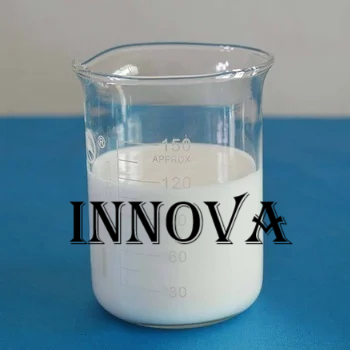
The antifoaming agent is supplied as a liquid, which is the practical form for dosing pumps. Grade selection depends on the process stage, the temperature at the dosing point, and whether the downstream process allows silicone. Where a plant has a specific foaming pattern — for example a pan that foams only in the last strike — we discuss a grade and dose matched to that pattern rather than a general product.
| Parameter | Details |
|---|---|
| Form | Liquid |
| Chemistry | Silicone and non-silicone |
| Application | Sugar processing, distillery fermentation, ETP aeration |
| Active content | TDS on request |
| pH (as supplied) | TDS on request |
| Density | TDS on request |
| Shelf life | TDS on request |
Antifoaming agent dosage is expressed in ppm on the process stream, and is set from the foam severity, the organic load and the temperature at the dosing point. A fixed ppm is not reliable across plants, because the same product at the same ppm behaves differently in a juice line and a fermentation vessel. We share a starting range from the TDS and confirm it after a trial in your plant.
The dosing pump and the storage arrangement matter as much as the chemical. Antifoaming agents are usually fed by a small metering pump from a day tank, and the pump has to be sized for the expected dose range. We discuss both at the time of selection.
Standard industrial packing; pack sizes on request. Store in a cool, dry place away from direct sunlight, and keep the drum closed when not in use. Follow the SDS for handling.
We help with grade selection, feeding-point review and interpretation of your foam pattern. Where a number cannot be confirmed without a trial, we say so. Final specifications are confirmed after a trial in your plant.
What is the difference between an antifoaming agent and a defoamer?
An antifoaming agent is dosed continuously to stop foam from forming in the first place, while a defoamer is added to knock down foam that has already built up. In sugar processing, antifoaming agents are usually fed into the juice or syrup line, and defoamers are added into a pan or vessel when foam is already visible. The two are not interchangeable, which is why we supply them as separate products.
Where is antifoaming agent dosed in a sugar mill?
The usual feeding points are the juice line ahead of the clarifier, the evaporator feed, and the pan feed line. The exact point depends on where your foam problem is worst. In distilleries it is dosed into the fermentation vessel, and in ETPs it is dosed into the aeration tank. We review the feeding point with your team before recommending a dose.
What dosage of antifoaming agent is used in sugar processing?
Antifoaming agent dosage is expressed in ppm on the process stream, and is set from the foam severity, the organic load and the temperature at the dosing point. A fixed ppm is not reliable across mills, so the starting figure comes from your TDS and is confirmed after a trial in your plant.
Is silicone or non-silicone antifoaming agent better for sugar processing?
Silicone antifoaming agents are usually chosen where foam is severe and the process runs hot, because they stay effective at high temperature. Non-silicone agents are used where the downstream process or the product specification rules out silicone. The right choice depends on your process stage and the specification you need to meet, not on a general preference.
For grade selection, feeding-point review or a sample discussion for your plant, call +91-9312871070. We will ask about your process stage, foam pattern and dosing setup first, because that is what decides the right product.
Related reading: antifoaming agents for preventive foam control and defoamers for knocking down existing foam.
© 2026 Innovacorp India Pvt Ltd. All Rights Reserved. Managed & Developed by Innova Corporate India
 Chat with Us