
“Knock Down Foam. Protect Your Pans. Recover More Sugar.”
Innovacorp is a manufacturer of anti-foaming agents for sugar processing and distillery applications. Foam is a daily problem in sugar mills — it builds up in clarifiers, evaporators, vacuum pans and fermentation tanks, and if it is not controlled, it leads to syrup overflow, reduced heat transfer and pump cavitation. Our defoamers are formulated to knock down existing foam quickly and prevent new foam from forming, so the process runs without interruptions.
Foam in sugar processing is not just a nuisance — it has a direct cost. When foam builds up in an evaporator, heat transfer drops and steam consumption goes up. When it builds up in a vacuum pan, syrup can overflow and sugar is lost. In fermentation tanks, foam can push yeast out of the vessel and affect ethanol yield. Controlling foam at the source keeps the process stable and reduces losses that are otherwise difficult to measure but add up through the season.
Indicative values from our standard anti-foaming agent range. Final specification is confirmed against your process conditions.
| Parameter | Typical Value |
|---|---|
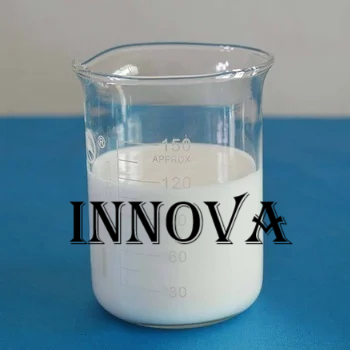
| Appearance | Milky white to pale yellow liquid |
| Type | Silicone / Non-silicone / Hybrid |
| pH (1% solution) | 6.0 – 8.5 |
| Active Content | 20% – 40% |
| Density | 0.95 – 1.05 g/cc |
| Shelf Life | 12 months from manufacture |
Dosage depends on the process, foam level and application point. Some indicative ranges:
Exact dosage should be confirmed with our technical team based on your process conditions.
Foam behaviour changes with juice quality, brix level and process temperature. Our technical team works with your process chemist to review foam conditions and recommend the right defoamer type and dosage for your plant. For large mills, we arrange plant trials before finalising the recommendation.
Q. What industries use Innovacorp anti-foaming agents?
Our anti-foaming agents are used in sugar processing, distilleries, fermentation plants and
effluent treatment plants to control foam during processing.
Q. What is the difference between silicone and non-silicone anti-foaming agents?
Silicone-based defoamers are effective at very low dosage and work well in water-based systems.
Non-silicone defoamers are preferred where silicone contamination is not acceptable, such as in
certain fermentation and food applications. We manufacture both types.
Q. What is the typical dosage of anti-foaming agent?
Dosage usually ranges from 50 to 300 ppm depending on the process. Call +91-9312871070 for
guidance.
Q. How should anti-foaming agent be stored?
Store in a cool, dry place away from direct sunlight. Keep containers closed when not in use.
Shelf life is 12 months from the date of manufacture.
© 2026 Innovacorp India Pvt Ltd. All Rights Reserved. Managed & Developed by Innova Corporate India
 Chat with Us