
“Control Foam. Stabilise Aeration. Meet Discharge Norms.”
Innovacorp manufactures defoamers for effluent treatment plants. Foam is a common problem in ETPs that use biological treatment — aeration tanks, equalisation tanks and activated sludge systems produce foam when the water contains surfactants, oils or high organic load. If foam is not controlled, it spills over the tank, blocks walkways and reduces the oxygen transfer that the treatment depends on. Our defoamers are formulated to knock down existing foam quickly and prevent it from forming again. Both silicone-based and non-silicone-based variants are available depending on your ETP design. Every batch is manufactured at our facility and tested before dispatch.
Foam in an effluent treatment plant is more than a visual problem. When foam builds up on the surface of an aeration tank, it reduces the oxygen transfer from the air blowers to the water, which affects the microbial population that does the actual treatment. In severe cases, foam overflows the tank and floods the surrounding area, creating a safety hazard and a housekeeping problem. Overflow also means loss of biomass, which takes time to recover. Controlling foam at the source keeps the biological process stable and reduces the load on downstream stages.
Indicative values from our standard ETP defoamer range. Final specification is confirmed against your ETP design.
| Parameter | Typical Value |
|---|---|
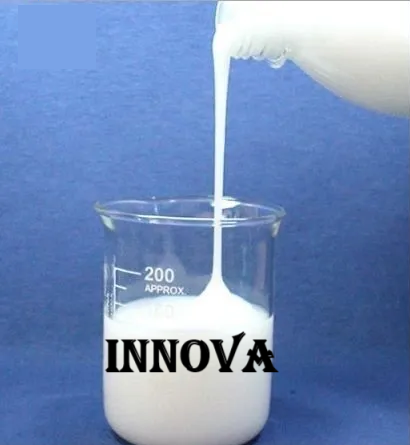
| Appearance | Milky white to pale yellow liquid |
| Type | Silicone / Non-silicone / Mineral oil based |
| pH (1% solution) | 6.0 – 8.5 |
| Active Content | 20% – 40% |
| Density | 0.95 – 1.05 g/cc |
| Shelf Life | 12 months from manufacture |
Dosage depends on the foam level and system design. Indicative ranges:
Exact dosage should be confirmed with our technical team based on your ETP parameters.
Foam behaviour in an ETP changes with the effluent composition, microbial population and aeration rate. Our technical team works with your ETP operator or environmental engineer to review the problem and recommend the right defoamer type and dosage for your system. For large ETPs, we arrange field trials before finalising the recommendation.
Q. What is the difference between a defoamer and an antifoam?
Antifoams prevent foam from forming, while defoamers break down foam that has already formed. In
practice, most industrial formulations act as both. Innovacorp manufactures both types.
Q. Which industries use defoamers for effluent treatment?
Defoamers are used in textile, paper, sugar, distillery, pharmaceutical and chemical industry ETPs
where aeration and biological treatment cause foam build-up.
Q. What is the dosage of defoamer in ETP?
Typical dosage ranges from 20 to 100 ppm in the aeration tank or effluent stream. Call
+91-9312871070 for guidance.
Q. Is silicone defoamer better than non-silicone defoamer?
Silicone defoamers are effective at very low dosage and work well in water-based systems.
Non-silicone defoamers are preferred where silicone contamination is not acceptable. The choice
depends on your ETP design and downstream usage.
© 2026 Innovacorp India Pvt Ltd. All Rights Reserved. Managed & Developed by Innova Corporate India
 Chat with Us