
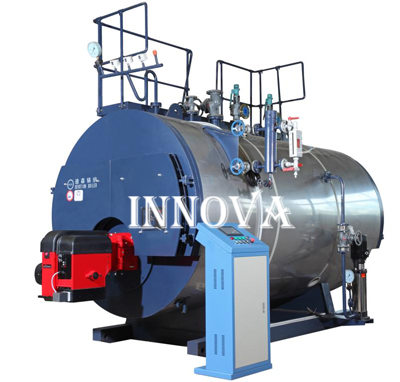
Amritsar’s boilers do not all operate under the same conditions. Rana Sugars at Buttar Seviyan runs a 55 TPH bagasse boiler at 65 kg/cm² pressure and 480°C steam temperature, feeding a 12 MW cogeneration turbine. Ajnala Co-operative Sugar Mill operates a 32 T/H boiler at 45 kg/cm² working pressure. The Focal Point units along Vallah Road and Mehta Road run smaller boilers for process steam. Each of these systems faces the same fundamental threats—scale, oxygen corrosion, and pH drift—but the chemistry limits and treatment priorities differ with pressure and feedwater quality. Boiler chemicals are not a single product; they are a programme selected to match the boiler.
At 65 kg/cm², the margin for error is narrower. Silica volatility increases with pressure, and silica carryover into steam can deposit on turbine blades. Caustic alkalinity must be controlled tightly to avoid caustic embrittlement in areas of high stress. The feedwater quality requirements are stricter, and the scale inhibitor must perform under higher heat flux.
At 45 kg/cm², the limits are somewhat wider, but the fundamentals do not change. Scale still insulates tubes and raises fuel consumption. Dissolved oxygen still causes pitting. The difference is in the target ranges and the tolerance for excursions. A programme that works for Ajnala’s boiler may not meet Rana’s tighter requirements, and vice versa.
Amritsar groundwater carries hardness around 207 mg/L and TDS ranging from about 308 to 1002 mg/L. Even after softening, some hardness and silica remain in the feedwater. In the boiler, these impurities concentrate as steam is generated. Without treatment, they deposit on heat transfer surfaces as scale.
Scale inhibitor works by threshold inhibition and crystal modification. It keeps scale-forming salts from nucleating on the metal surface and distorts any crystals that do form so they remain suspended in the boiler water rather than adhering to tubes. The dose is set according to the feedwater hardness, the cycles of concentration, and the boiler’s blowdown practice.
Dissolved oxygen in feedwater causes pitting corrosion, which can perforate boiler tubes without warning. The damage is localized and often hidden under deposits until a failure occurs. Oxygen scavengers react with dissolved oxygen before it reaches the boiler, converting it to harmless compounds.
For sugar mills, the feedwater system includes deaerators and condensate return. The scavenger dose must account for the residual oxygen after deaeration and any oxygen ingress through the condensate system. Amritsar’s mills, running through the crush season with variable steam demand, need a scavenger programme that responds to load changes rather than a fixed dose.
Steam carries volatile compounds, including CO2 from bicarbonate breakdown in the boiler. When steam condenses, CO2 dissolves in the condensate, forming carbonic acid. That acid attacks the condensate return lines and any steel surfaces it contacts. Condensate treatment chemicals neutralize the acid and form a protective film on the metal surface.
For Rana Sugars’ cogeneration plant and Ajnala’s mill, condensate return is a significant part of the feedwater. Protecting those lines from corrosion is not just about equipment life; it is about keeping iron corrosion products out of the boiler, where they can deposit on tubes and contribute to scale.
Boiler water treatment chemicals are supplied in standard industrial packing. Pack sizes are available on request. Store in a dry, covered area away from acids, oxidizers, and direct sunlight. Keep containers closed when not in use. For liquid grades, protect from freezing if the formulation requires it. Use appropriate personal protective equipment during handling and follow the product-specific guidance for dilution and dosing.
We manufacture and supply boiler water treatment chemicals for scale, oxygen, alkalinity, and condensate control. For Amritsar plants, the starting point is your boiler specification and feedwater analysis—pressure, capacity, feedwater hardness, and current blowdown practice. From there we can suggest a programme and a starting dose, with the understanding that final adjustment happens on your boiler with your water.
Q: What is the difference between treating Rana Sugars' 65 kg/cm² boiler and Ajnala's 45 kg/cm² boiler?
A: Higher pressure means tighter limits on boiler water chemistry. Rana Sugars operates a 55 TPH boiler at 65 kg/cm², where silica and caustic alkalinity control become more critical because of the higher heat flux and steam temperature. Ajnala Co-operative operates a 32 T/H boiler at 45 kg/cm², which allows slightly wider chemistry limits but still requires scale and oxygen control. The chemical programme should be selected according to the boiler's design pressure and feedwater quality, not a generic recommendation.
Q: How does Amritsar's groundwater quality affect boiler chemical selection?
A: Amritsar groundwater TDS ranges from about 308 to 1002 mg/L, with hardness around 207 mg/L and fluoride between 0.2 and 2.0 mg/L. For boilers, the hardness and silica content in the feedwater determine the scale inhibitor dose and the blowdown frequency. Higher TDS also means more dissolved solids entering the boiler, which affects steam purity. Feedwater analysis should drive the chemical selection.
Q: What chemicals are typically used in Amritsar sugar mill boilers?
A: Sugar mill boilers in Amritsar typically use a combination of scale inhibitor, oxygen scavenger, alkalinity builder, and condensate treatment. Scale inhibitor controls hardness deposition on tubes. Oxygen scavenger prevents pitting corrosion in the feedwater system. Alkalinity builder holds boiler water pH in the protective range. Condensate treatment protects return lines from carbonic acid corrosion caused by CO2 in the steam.
Q: How should boiler chemicals be stored at an Amritsar plant?
A: Store in a dry, covered area away from acids, oxidizers, and direct sunlight. Keep containers closed when not in use. For liquid grades, protect from freezing if the formulation requires it. Use appropriate personal protective equipment during handling and follow the product-specific guidance for dilution and dosing. Standard industrial packing is used; pack sizes are available on request.
To discuss your boiler water treatment programme, call +91-9312871070.
© 2026 Innovacorp India Pvt Ltd. All Rights Reserved. Managed & Developed by Innova Corporate India
 Chat with Us