
Amritsar’s New Focal Point on Mehta Road was planned for power loom, electroplating, and dyeing units. What it got, along with the industrial sheds, was a recurring effluent problem. PPCB inspections have found units operating without functional ETPs—Amar Color Chem at Plot 26 and Sham Dyers at Plot C-51 were both directed to close for violations under the Water and Air Acts. The CETP planned for the cluster is still delayed because the plot has not been handed over to the SPV. For dyeing units that remain in operation, colour removal is not a compliance checkbox. It is the difference between staying open and joining the closure list. This page is about the polymer route to that problem: cationic colour reducing agents.
Most textile dyes used in Amritsar’s dyeing units—reactive dyes, acid dyes—are anionic. They carry a negative charge when dissolved in water. That charge keeps the dye molecules dispersed and soluble, which is useful in the dye bath but problematic in the effluent, because the colour stays in solution and passes through conventional treatment.
A cationic polymer carries a positive charge. When dosed into the effluent, it does two things. First, it neutralises the dye molecule’s negative charge, reducing its solubility. Second, because the polymer is a long chain, it bridges multiple dye molecules together, forming larger flocs. Those flocs can then be settled or filtered out. The colour leaves the water with the sludge, not with the discharge.
This is a different mechanism from an inorganic coagulant like alum or ferric chloride, which relies on metal hydrolysis products to destabilise particles. The polymer route typically produces less sludge for the same colour removal, because the dose is lower and no metal hydroxide precipitate is formed.
Anionic dyes respond well to cationic polymers. Reactive dyes, which are widely used in Amritsar’s cotton and blend processing, are a strong fit. Acid dyes, used on nylon and wool, also respond. Disperse dyes, which are non-ionic or only weakly ionic, are less predictable. Vat and sulphur dyes may need a different approach altogether.
Amritsar’s dyeing units do not run a single dye class. A unit processing reactive dyes for one customer and disperse dyes for another produces effluent that changes composition through the day. This is why a polymer that works on one batch may underperform on the next. The selection should be based on a jar test of the actual effluent at the time of sampling, not on a generic “for textile effluent” label.
In June 2020, PPCB directed all textile dyeing industries discharging into drains to upgrade their ETPs to achieve BOD of 10 mg/l within three months and to install Online Continuous Effluent Monitoring Systems connected to PPCB and CPCB servers. BOD 10 mg/l is a stringent standard, and it is about organic load, not colour. A colour reducing agent does not directly reduce BOD. It reduces colour and, to some extent, the COD associated with the dye molecules.
For a unit facing the BOD 10 mg/l requirement, the polymer is a polishing step, not the whole solution. The biological treatment has to do the BOD work. The polymer brings the colour down after the biology has done what it can. A unit that relies on polymer alone to meet BOD 10 mg/l will not succeed.
Cationic polymers are effective at low doses, but they are not forgiving of overdose. Too little polymer, and the charge neutralisation is incomplete; colour remains. Too much, and the excess polymer itself contributes to colour and COD in the treated water. The optimal dose is a narrow window, determined by jar test.
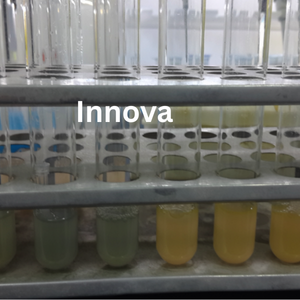
The jar test should measure colour removal and COD reduction across a range of polymer concentrations. The right dose is the point where colour removal plateaus, not the point where the water looks clearest. For Amritsar units with variable dye batches, the dose may need adjustment through the day. A unit running a dark shade will need more polymer than one running a pastel.
Colour reducing agents are supplied in standard industrial packing. Pack sizes are available on request. Store in a dry, covered area away from direct sunlight and incompatible chemicals. Keep containers closed when not in use. For liquid grades, protect from freezing if the formulation requires it. Use appropriate personal protective equipment during handling and follow the product-specific guidance for dilution and dosing.
We manufacture and supply cationic polymer colour reducing agents for textile effluent treatment. For Amritsar dyeing units, the useful conversation starts with your effluent—what dye classes you run, what your current ETP configuration is, and what parameter you need to meet. From there we can suggest a polymer chemistry and a jar test protocol, with the understanding that final dosage confirmation comes from testing on your actual effluent.
Q: How do cationic polymer colour reducing agents work on Amritsar dyeing effluent?
A: Textile dyes are typically anionic, meaning they carry a negative charge in water. Cationic polymers carry a positive charge. When dosed into effluent, the polymer neutralises the dye molecule's charge and bridges multiple dye molecules together into larger flocs. These flocs can then be settled or filtered out. The mechanism is different from a simple coagulant, which relies on metal salt hydrolysis. For Amritsar dyeing units, the polymer route often produces less sludge than inorganic coagulants.
Q: Which dye classes respond best to colour reducing agents?
A: Anionic dyes, including reactive dyes and acid dyes, respond well to cationic polymers because the charge interaction is direct. Disperse dyes, which are non-ionic or weakly ionic, may respond less predictably. Vat dyes and sulphur dyes may require a different approach. Amritsar's dyeing units run a mix of dye classes, so the polymer selection should be tested against the actual effluent, not assumed from the dye class alone.
Q: How is dosage determined for a colour reducing agent in Amritsar?
A: Dosage is determined by a jar test on the actual effluent. The test measures colour removal and COD reduction at several polymer concentrations. The optimal dose is the point where colour removal plateaus without overdosing, because excess polymer can actually increase colour and COD in the treated water. For a unit with variable dye batches, the dose may need adjustment through the day.
Q: Do colour reducing agents increase sludge volume in an Amritsar ETP?
A: Polymer-based colour reducing agents generally produce less sludge than inorganic coagulants like alum or ferric chloride, because the polymer dose is lower and the mechanism does not involve metal hydroxide precipitation. However, some sludge is still generated from the flocculation process. For Amritsar units with limited sludge handling capacity, this is a relevant consideration in product selection.
To discuss your effluent colour problem, call +91-9312871070.
© 2026 Innovacorp India Pvt Ltd. All Rights Reserved. Managed & Developed by Innova Corporate India
 Chat with Us