
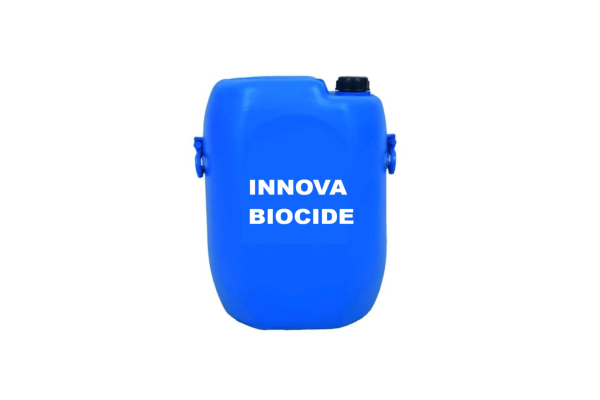
Leuconostoc does not respond to every biocide chemistry the same way. The bacterium that produces dextran in cane juice is a lactic acid bacterium that grows inside biofilms and in planktonic form, and the chemistry that works on one form may not work on the other. Innovacorp manufactures and supplies biocide chemistry for sugar mills in Andhra Pradesh, selected on the microbial problem and the process stage where it occurs, not on a generic recommendation.
Leuconostoc mesenteroides is the primary bacterium responsible for dextran formation in cane sugar processing. It enters the cane through cut ends and damaged tissue, and it produces the enzyme dextransucrase that converts sucrose into dextran [citation:10]. Once dextran forms, it increases juice viscosity, affects crystallization, and alters sugar crystal shape [citation:10]. The economic loss is not just the sucrose consumed by the bacteria. It is also the processing difficulty that follows.
Different biocide chemistries attack the bacterium at different points. Organosulfur compounds interfere with enzyme systems. Quaternary ammonium compounds disrupt cell membranes. Oxidizing agents attack the cell wall directly. The selection depends on whether the target is planktonic bacteria in juice or established biofilm in pipelines and tanks.
Sugar mills use three broad categories of biocide chemistry, and each has a different role.
The choice is not about which chemistry is stronger. It is about which chemistry reaches the target in the form it exists in your process. A biocide that works on planktonic bacteria in juice may not penetrate a biofilm in a pipeline elbow.
Biocide application points in a sugar mill are not interchangeable. Each point has a different microbial load and a different contact time.
The feeding point determines the contact time, and contact time determines whether the chemistry can act before it is consumed or diluted.
Published patent literature describes biocide doses ranging from 1 ppm to 20 ppm on cane for mill sanitation applications, with 10 ppm as a preferred dose in some formulations [citation:3]. The actual dose depends on the microbial load, the cane quality, and the point of addition.
A starting dose is recommended after reviewing your process and microbial history. The final dose is confirmed on a plant trial, because microbial load changes with cane quality and harvest conditions through the crushing season.
Biocide specifications depend on the chemistry and the grade. Final specification is confirmed on the technical data sheet for each grade.
TDS on request.
Mill teams in Andhra Pradesh usually want to know three things before they commit to a biocide program: whether the chemistry will control the specific microbial problem they have, how the dose will change as cane quality shifts, and whether the biocide is compatible with the other process chemicals in use. These questions are answered by reviewing the microbial load, the process stage, and the biofilm history of the mill.
One common mistake is changing the biocide dose when the problem is actually the chemistry. If Leuconostoc is established in a biofilm, increasing the dose of a biocide that cannot penetrate the biofilm will not solve the problem. The chemistry needs to be reviewed, not just the dose.
The choice depends on the process stage where the biocide is applied, the microbial load, and the contact time available. Organosulfur biocides are often used in milling and juice streams, while quaternary ammonium compounds are used where biofilm control is the priority. Oxidizing biocides are selected where rapid action is needed. We review the process stage and microbial load before recommending a chemistry.
Organosulfur biocides (dithiocarbamates) act on microbial enzyme systems and are effective against Leuconostoc in juice streams. Quaternary ammonium compounds disrupt cell membranes and have surfactant properties that help penetrate biofilms. The selection depends on whether the problem is planktonic bacteria in juice or established biofilm in pipelines and tanks.
Published patent literature describes doses ranging from 1 ppm to 20 ppm on cane for mill sanitation applications. The actual dose depends on the microbial load, the cane quality, and the point of addition. A starting dose is recommended after reviewing your process and microbial history, and confirmed on a plant trial.
Biocide failure usually comes from one of three causes: the chemistry does not match the microbial population, the dose is set below the effective threshold, or the biocide cannot penetrate the biofilm where bacteria are established. Leuconostoc in a mature biofilm is more resistant than planktonic bacteria in juice. Chemistry selection and feeding point both matter.
Share your process stage, microbial load history, and current biocide program. Our technical team will review the chemistry and feeding strategy against your process. Call +91-9312871070.
© 2026 Innovacorp India Pvt Ltd. All Rights Reserved. Managed & Developed by Innova Corporate India
 Chat with Us