
A low pH excursion does not just lower the number on the controller. It changes what is dissolved in the water. When pH drops, iron, zinc, calcium and copper become more soluble. When pH is raised back to target, those dissolved metals can precipitate on heat transfer surfaces, creating a new problem under the old one. Raising pH is the first step, not the whole recovery.
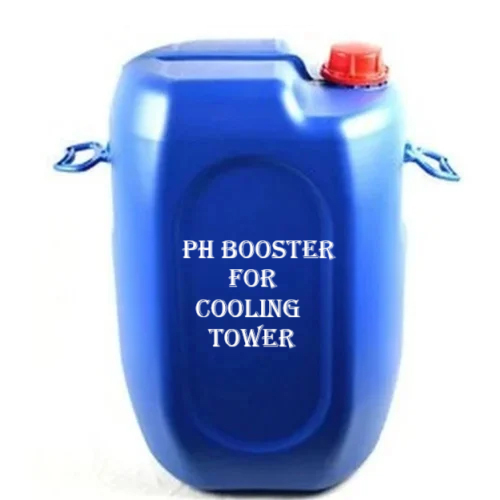
Innovacorp India supplies pH boosters for cooling water systems in Andhra Pradesh. This page is about the two cooling water profiles that exist in the state, the LSI/RSI target that determines dosing, and the recovery procedure when pH drops below the operating range.
Carbon steel corrosion rate at pH 4.0 can be roughly 100 times higher than at neutral pH. That is the number NACE RP0392-2001 uses to describe why low pH excursions are among the most damaging cooling water upsets. The corrosion is not the only problem. The treatment programme itself loses effectiveness at low pH, and the dissolved metals that enter the water can complex with polymers and phosphonates, reducing their availability when pH is restored.
In Andhra Pradesh, low pH excursions can come from acidic process leaks, acid overfeed, or airborne acid gases in industrial areas. The recovery procedure needs to account for what dissolved during the excursion, not just the pH number.
Andhra Pradesh has two distinct cooling water profiles. The largest single installation is NTPC Simhadri in Visakhapatnam, which uses seawater for circulating cooling. Its natural draft cooling towers handle 60,000 m³/hour each, among the largest in Asia at construction. Seawater is naturally alkaline (pH around 8.0–8.3), so a pH booster is not the primary treatment. Scale and corrosion control in seawater systems rely on different chemistry.
Inland, the pharma SEZ and multi-product SEZ facilities around Visakhapatnam, and industrial units in other districts, use freshwater or groundwater for cooling. These systems operate in the pH 7.0–9.0 range and are where pH boosters are relevant. The makeup water quality varies by district, and the dosing requirement follows the makeup alkalinity and the cycles of concentration.
The Langelier Saturation Index (LSI) is the standard tool for setting the pH target in freshwater cooling systems. LSI is calculated from pH, calcium hardness, alkalinity, temperature and TDS. A slightly positive LSI (0 to +0.5) promotes a thin protective calcium carbonate film. A negative LSI indicates the water is corrosive and will dissolve existing scale or metal.
The Ryznar Stability Index (RSI) is an alternative that uses the same inputs but weights them differently. A common target for cooling water is RSI between 5.6 and 7.0. For high-TDS water (above 4,000 mg/L), the Stiff-Davis Index is more appropriate than LSI because it accounts for ionic strength.
The practical point is that pH is not the only variable in the index. Raising pH with a booster changes the LSI, but so does changing the calcium hardness or alkalinity of the makeup water. The dose should be set against the full water analysis, not against pH alone.
When pH drops below the operating range, the recovery procedure has three stages. First, stop the source of the acid. Second, raise pH in a controlled way, not by dumping booster into the system. Third, flush the system to remove dissolved metals before they precipitate on heat transfer surfaces.
NACE RP0392-2001 describes the repassivation step that follows: after the dissolved metals are removed, the metal surface needs to be brought back to a passive state. This is not achieved by pH alone; it requires the corrosion inhibitor programme to be re-established and monitored. If the excursion was severe, an inspection of the heat exchangers may be needed before the system is returned to normal operation.
In Andhra Pradesh facilities with high cycles of concentration, the recovery is more complex because the dissolved solids load is already elevated. A flush step may be necessary before the pH booster is reintroduced, to avoid precipitating the dissolved metals onto tube surfaces.
| Parameter | Typical Value / Range |
|---|---|
| Appearance | Clear to pale liquid, grade dependent |
| pH (as supplied) | Alkaline, grade dependent |
| Active content | TDS on request |
| Dosing range | Set against makeup alkalinity and target LSI, TDS on request |
| Target pH range | 7.0–9.0 for freshwater systems |
| Compatibility | Compatible with standard scale inhibitors and biocides, confirm against TDS |
Specification values vary by product grade. Confirm final spec after water analysis and against the TDS.
Supplied in standard industrial packing. Pack sizes on request. Store in sealed containers away from acids and incompatible materials. Follow the safety data sheet for handling and personal protective equipment.
Q: How should a cooling system recover after a low pH excursion?
A: Recovery requires more than raising pH back to target. NACE RP0392-2001 notes that low pH excursions dissolve metal and deposits, and when pH is raised, those dissolved materials can precipitate on heat transfer surfaces, causing underdeposit corrosion. The recovery procedure typically involves controlled pH adjustment, flushing to remove dissolved metals, and repassivation of the metal surface. The specific steps depend on the excursion severity and system metallurgy.
Q: Does a seawater cooling tower in Andhra Pradesh need a pH booster?
A: Seawater is naturally alkaline (pH around 8.0–8.3), so a pH booster is usually not the primary treatment. The main challenges in seawater cooling are scale control (calcium carbonate) and corrosion control, which require different chemistry. The NTPC Simhadri plant in Visakhapatnam uses seawater for circulating cooling, and its treatment programme is designed around seawater chemistry rather than pH elevation.
Q: What pH range should be targeted for LSI control in cooling water?
A: Cooling water systems typically operate in the pH 7.0–9.0 range. The target LSI should be slightly positive (0 to +0.5) to promote a thin protective calcium carbonate film without excessive scaling. The exact target depends on the system metallurgy and the saturation index used. For high-TDS water, the Stiff-Davis Index may be more appropriate than LSI. A water analysis is needed to set the target.
Q: How is pH booster dose set when cycles of concentration change?
A: Higher cycles of concentration (COC) increase the dissolved solids and alkalinity in the cooling water, which changes the pH buffering requirement. The pH booster dose should be adjusted when COC changes, not kept fixed. The dose is typically set based on the makeup water alkalinity and the target pH in the circulating water. A water analysis and a dose trial are needed to confirm the set point.
Call: +91-9312871070 — to discuss pH control and recovery for your cooling system.
© 2026 Innovacorp India Pvt Ltd. All Rights Reserved. Managed & Developed by Innova Corporate India
 Chat with Us